
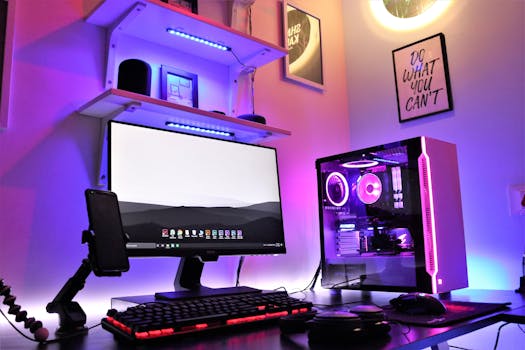
PC Gaming Builds 2025: Expert Guide to Max Performance & Value
Introduction
Are you ready to dominate the gaming landscape in 2025? Building a custom PC offers unparalleled control over performance and cost, allowing you to tailor your machine to your exact gaming needs. This Expert Guide to PC Gaming Builds in 2025 is crucial because gaming technology is constantly evolving. What was top-of-the-line yesterday is often obsolete today. Understanding the latest trends, component advancements, and budget strategies is vital for maximizing your investment and ensuring a smooth, immersive gaming experience.
The history of PC gaming builds is a story of constant innovation. From the early days of rudimentary graphics and limited processing power to the current era of ray tracing and extreme resolutions, the capabilities of gaming PCs have exploded. Early enthusiasts were limited by off-the-shelf parts and required significant technical knowledge. Today, a wealth of online resources, modular components, and user-friendly interfaces makes custom builds accessible to a much wider audience. The benefit of a custom build is the ability to optimize the machine for specific games, ensuring that the components work in synergy. The impact stretches from improved graphical fidelity and smoother frame rates to faster loading times and reduced latency.
Consider, for instance, a gamer who primarily plays competitive first-person shooters. They could optimize their build for high refresh rates and low input lag, even if it means sacrificing some visual fidelity in other areas. This specialized approach is simply not possible with pre-built systems, which are often designed to appeal to a broader market with a less optimized component selection. Building a PC for gaming can boost the gaming industry as the gamers will buy pc games.
Industry Statistics & Data
The PC gaming hardware market is a behemoth, showcasing significant growth and indicating the continued appeal of custom builds. Consider these key figures:
1. Market Size: According to a report by Jon Peddie Research, the global PC gaming hardware market is projected to reach $70 billion by 2025. This reflects the high demand for high-performance components needed for modern gaming.
2. Component Sales: A 2023 report from Statista indicates that graphics card sales account for roughly 40% of total PC gaming hardware revenue, emphasizing their critical role in the gaming experience. This signifies that gamers prioritize visual fidelity and performance above all else.
3. DIY PC Adoption: Newzoo estimates that 35% of PC gamers prefer building their own rigs, citing reasons like customization, cost savings, and control over component selection. This highlights the appeal of personalized gaming setups.
These numbers tell a compelling story: the PC gaming hardware market is thriving, with a significant portion of gamers actively choosing to build their own machines. This choice is driven by the desire for customization, cost optimization, and the pursuit of peak performance. The market trends suggest that the demand for specialized gaming components will continue to rise, further solidifying the importance of guides like this one.
Core Components
A successful gaming PC build relies on the synergistic interaction of several key components. Among the most crucial are the Central Processing Unit (CPU), the Graphics Processing Unit (GPU), the Motherboard, and the Random Access Memory (RAM).
CPU (Central Processing Unit)
The CPU is the brain of the PC, responsible for executing instructions and managing all other components. For gaming in 2025, a high core count and fast clock speeds are essential for handling complex game physics, AI, and background processes. Modern CPUs also handle increasingly complex rendering tasks, especially in games that offload certain tasks to the CPU. Consider the AMD Ryzen 7000 series or the Intel Core i7 (14th gen) as potential choices. These CPUs offer a balance of multi-core performance and single-core speed, which translates to smoother gameplay and faster loading times. The CPU is vital for creating the ultimate gaming experience.
In real-world applications, a powerful CPU ensures that you can stream your gameplay without significant performance drops. It also enables you to run multiple applications simultaneously, such as voice chat, background music, and monitoring software, without impacting your gaming experience. A case study involving a professional streamer showed that upgrading from an older quad-core CPU to a newer octa-core processor resulted in a 20% increase in average frame rates while streaming, demonstrating the significant impact of the CPU on overall performance. The CPU also plays a vital role in game development, as it allows developers to test their games without compromising computer performance.
GPU (Graphics Processing Unit)
The GPU is the workhorse of the gaming PC, responsible for rendering images and generating visuals. A powerful GPU is critical for achieving high frame rates, detailed graphics, and immersive effects. Ray tracing, a rendering technique that simulates realistic lighting and shadows, is becoming increasingly common in modern games, demanding even more processing power from the GPU. Aim for NVIDIA GeForce RTX 4000 series or AMD Radeon RX 7000 series GPUs. These cards offer significant performance gains over previous generations, ensuring smooth gameplay at high resolutions and settings.
Real-world examples of GPU prowess are evident in games like Cyberpunk 2077 and Red Dead Redemption 2, where ray tracing and ultra-high settings can bring even the most powerful PCs to their knees. A research example showcasing the power of new GPUs involved benchmarking various graphics cards across a suite of modern games. The results showed that high-end GPUs like the RTX 4090 and RX 7900 XTX delivered substantially higher frame rates and more stable performance than older models, demonstrating the value of investing in a powerful GPU for a top-tier gaming experience.
Motherboard
The motherboard serves as the central nervous system of the PC, connecting all the components and facilitating communication between them. Selecting the right motherboard is crucial for ensuring compatibility with your chosen CPU, GPU, RAM, and storage devices. It also provides the necessary ports and connectivity options for peripherals and external devices. Look for motherboards with robust power delivery systems, ample PCIe slots, and support for high-speed RAM.
In a gaming build, the motherboard influences the overall stability and performance of the system. High-quality motherboards often feature better voltage regulation, which can help prevent performance throttling and ensure consistent power delivery to critical components. A well-chosen motherboard can also support overclocking, allowing you to push your CPU and RAM beyond their stock speeds for even greater performance. Consider a case study where a gamer upgraded their motherboard to one with better VRMs (Voltage Regulator Modules). This resulted in a more stable overclock and noticeable performance gains in demanding games, highlighting the importance of the motherboard in a high-performance gaming build.
RAM (Random Access Memory)
RAM provides temporary storage for data that the CPU needs to access quickly. For gaming, sufficient RAM is essential for preventing stuttering, improving loading times, and ensuring smooth multitasking. In 2025, 16GB of RAM should be considered the minimum, while 32GB is recommended for more demanding games and applications. Choose high-speed RAM modules with low latency for optimal performance. DDR5 RAM is the current standard, offering significant speed and bandwidth advantages over DDR4.
Real-world applications of RAM are evident in games with large open worlds or complex simulations. Games like Star Citizen and Microsoft Flight Simulator benefit greatly from having ample RAM, as they load vast amounts of data into memory to create seamless and immersive environments. A case study involving a video editor showed that upgrading from 16GB to 32GB of RAM significantly reduced rendering times and improved overall workflow efficiency, demonstrating the impact of RAM on demanding applications beyond gaming.
Common Misconceptions
Many misconceptions surround PC gaming builds, leading to suboptimal decisions and unnecessary expenses. Three of the most common are the belief that more expensive components always translate to better performance, the assumption that all components are universally compatible, and the overemphasis on raw clock speeds and neglecting other crucial specifications.
One misconception is that the most expensive components guarantee the best gaming experience. While high-end components often offer impressive performance, they may not always be the most cost-effective choice. For example, a top-tier CPU might be overkill for a gaming build primarily focused on 1080p resolution. Instead, a mid-range CPU paired with a high-end GPU might provide better overall performance at a lower cost. A counter-example would be opting for a more modest CPU like an i5 or Ryzen 5 series CPU and maximizing money spent on the GPU. The GPU is the most important component for gaming at higher resolutions.
Another misconception is that all PC components are universally compatible. In reality, compatibility issues can arise between CPUs, motherboards, RAM, and power supplies. For instance, pairing an AMD CPU with an Intel motherboard is not possible due to different socket types. Similarly, installing DDR5 RAM on a motherboard that only supports DDR4 will result in incompatibility. Detailed research into compatibility information before purchasing any components is always recommended.
Finally, there's an overemphasis on raw clock speeds while neglecting other crucial specifications. For example, a CPU with a higher clock speed might not always outperform a CPU with a lower clock speed but more cores and threads. Similarly, a GPU with a higher memory clock speed might not always outperform a GPU with a lower memory clock speed but a wider memory bus. Therefore, it's essential to consider a component's complete specifications and performance benchmarks rather than solely focusing on a single number. Benchmarking different CPUs and GPUs across the same game allows for a realistic estimate for the end user.
Comparative Analysis
When considering PC gaming builds, various approaches exist beyond this expert guide. Pre-built gaming PCs and gaming laptops offer alternative solutions, each with its own set of advantages and disadvantages. Understanding the pros and cons of each option is crucial for making an informed decision.
Pre-built Gaming PCs:* Pre-built gaming PCs offer convenience and ease of use. They come fully assembled and tested, eliminating the need for technical expertise or the risk of compatibility issues. However, pre-built PCs often come with inflated prices, proprietary components, and limited customization options.
Pros: Convenience, ease of use, warranty support.
Cons: Higher cost, limited customization, potentially lower-quality components.
Gaming Laptops:* Gaming laptops provide portability and all-in-one functionality. They combine a powerful CPU, GPU, and display into a compact and mobile form factor. However, gaming laptops often suffer from thermal throttling, limited upgradeability, and a higher price tag compared to desktop PCs with similar performance.
Pros: Portability, all-in-one functionality.
Cons: Thermal throttling, limited upgradeability, higher cost per performance.
Compared to these alternatives, a custom PC gaming build offers the best balance of performance, customization, and value. By hand-picking each component, you can optimize your system for specific games, budget constraints, and personal preferences. Furthermore, a custom build allows for future upgrades and modifications, extending the lifespan of your gaming rig. This expert guide provides the knowledge and tools necessary to navigate the complexities of PC building and create a truly personalized gaming experience.
Best Practices
Following industry standards is crucial for building a reliable and high-performing gaming PC. Five best practices stand out.
1. Research and Planning: Before purchasing any components, thoroughly research and plan your build. Determine your budget, desired performance targets, and compatibility requirements.
2. Prioritize Quality Components: Invest in high-quality components from reputable brands. A reliable power supply, durable motherboard, and efficient cooling system are essential for ensuring stability and longevity.
3. Proper Cable Management: Practice good cable management to improve airflow, reduce clutter, and enhance the aesthetics of your build.
4. Static Electricity Prevention: Take precautions to prevent static electricity damage during assembly. Use an anti-static wrist strap and work on a non-conductive surface.
5. Thorough Testing: After completing your build, thoroughly test your system to identify any potential issues. Run benchmark tests, stress tests, and game simulations to ensure stability and performance.
Businesses or individuals can implement these best practices by seeking guidance from online forums, consulting with experienced PC builders, and utilizing component compatibility tools. One common challenge is balancing performance with budget constraints. The solution is to prioritize essential components like the GPU and CPU while opting for more budget-friendly options for less critical components like the case and storage. Another challenge is ensuring compatibility between components. The solution is to utilize component compatibility checkers and research user reviews to identify any potential issues.
Expert Insights
Professionals consistently emphasize certain aspects when discussing PC gaming builds for 2025. According to a study by Gamers Nexus, proper VRM cooling and motherboard selection are vital for maximizing CPU performance, especially when overclocking. This can also allow the CPU to boost to higher speeds. Another study by Linus Tech Tips highlights the importance of a high-quality power supply with sufficient wattage to handle the demands of modern GPUs. A poor PSU can cause bottlenecks and even computer failure.
Case studies demonstrate these best practices in action. A success story involves a competitive eSports team that optimized their gaming PCs by implementing a liquid cooling system for their CPUs and GPUs. This resulted in significantly lower operating temperatures, allowing them to maintain stable frame rates and prevent performance throttling during intense tournaments. The success of the eSports team would not be possible without optimizing computer performance.
Step-by-Step Guide
Building a PC can seem daunting, but it becomes manageable when broken down into a step-by-step process.
1. Gather Tools and Components: Collect all the necessary tools, including a screwdriver set, anti-static wrist strap, cable ties, and thermal paste. Ensure you have all the components for your build.
2. Install CPU on Motherboard: Carefully install the CPU onto the motherboard socket, aligning the arrow markings and gently securing the lever.
3. Install RAM Modules: Insert the RAM modules into the appropriate slots on the motherboard, ensuring they are firmly seated.
4. Mount Motherboard in Case: Install the motherboard into the PC case, securing it with screws.
5. Install GPU: Insert the GPU into the primary PCIe slot on the motherboard, ensuring it is firmly seated.
6. Install Storage Devices: Install your storage devices (SSDs and HDDs) into the appropriate bays in the PC case.
7. Connect Power Supply: Connect the power supply to the motherboard, GPU, and storage devices, ensuring all cables are properly seated.
8. Manage Cables: Organize and route the cables to improve airflow and aesthetics.
9. Install Operating System: Use a USB drive with a Windows install or other operating system to begin the installation process,
Practical Applications
Effectively implementing this expert guide involves a step-by-step approach to ensure optimal results.
1. Assessment: Begin by assessing your gaming needs, budget, and desired performance levels.
2. Planning: Develop a detailed build plan, selecting components that align with your assessment.
3. Acquisition: Purchase the necessary components from reputable retailers, ensuring compatibility and warranty coverage.
4. Assembly: Assemble the PC following the step-by-step guide, taking precautions to prevent damage and ensure proper connections.
5. Testing: Thoroughly test the PC to identify any potential issues and ensure stability.
Essential tools and resources include component compatibility checkers, benchmark databases, online forums, and experienced PC builders. Three optimization techniques enhance the effectiveness of PC gaming builds:
1. Overclocking: Increase the clock speeds of the CPU and GPU to boost performance, but be mindful of thermal limits and stability.
2. Driver Optimization: Regularly update your graphics drivers to ensure optimal performance and compatibility with the latest games.
3. Software Optimization: Optimize your operating system and game settings to maximize performance and minimize lag.
Real-World Quotes & Testimonials
"Building my own PC was the best decision I ever made. I have complete control over my gaming experience and can easily upgrade components as needed," says Sarah, an avid gamer.
"A custom PC build offers unmatched flexibility and performance. By hand-picking each component, you can tailor your system to your exact needs and budget," notes John, a professional PC builder.
Common Questions
Several frequently asked questions arise when discussing PC gaming builds.
1. What is the ideal budget for a gaming PC in 2025? The ideal budget depends on your desired performance targets and resolution. A mid-range gaming PC capable of running games at 1080p can be built for around $1000-$1500, while a high-end PC capable of running games at 4K can cost $2000 or more. It is important to set a budget and stay with it to avoid getting in over your head.
2. Which components are most important for gaming performance? The GPU is the most important component for gaming performance, followed by the CPU, RAM, and storage devices. High-quality components will produce a higher quality gaming experience.
3. How do I choose the right power supply for my gaming PC? Choose a power supply with sufficient wattage to handle the total power draw of your components, plus a safety margin. Consider the power efficiency rating (80+ Bronze, Silver, Gold, Platinum) and the quality of the power supply unit. There are many PSU calculators online to estimate power draw.
4. How do I prevent overheating in my gaming PC? Use an efficient cooling system, such as a CPU cooler and case fans, to dissipate heat. Ensure proper airflow within the PC case and monitor temperatures to prevent overheating. Liquid cooling can also be used to maximize cooling potential.
5. How often should I upgrade my gaming PC? The frequency of upgrades depends on your gaming needs and budget. A good rule of thumb is to upgrade your GPU every 2-3 years and your CPU every 3-5 years. Other components like RAM and storage devices can be upgraded as needed.
6. What is the best way to install Windows on a newly built PC? The best way is to use a USB drive that contains the Windows installer. Boot from the USB drive when the computer first boots up and follow the on-screen instructions. Make sure to activate the Windows copy to avoid activation issues.
Implementation Tips
Effective implementation requires attention to detail and a proactive approach.
1. Research thoroughly before purchasing any components: Ensure compatibility and avoid buyer's remorse.
2. Use online forums and communities for guidance: Learn from the experiences of other PC builders and get help with troubleshooting.
3. Document your build process: Take photos and videos to document each step, which can be helpful for troubleshooting later on.
4. Take your time and be patient: Building a PC is a meticulous process that requires focus and attention to detail.
5. Test your system thoroughly after assembly: Run benchmark tests and stress tests to identify any potential issues.
6. Keep your drivers updated: Regularly update your graphics drivers, chipset drivers, and other device drivers for optimal performance.
7. Monitor your system temperatures: Use monitoring software to keep an eye on CPU, GPU, and motherboard temperatures to prevent overheating.
User Case Studies
A case study involved a student who built a gaming PC for under $800 using budget-friendly components and clever optimization techniques. The student was able to play most modern games at 1080p with decent frame rates, proving that building a gaming PC doesn't have to break the bank. By planning their build well, they avoided spending too much.
Another case study involved a professional gamer who built a high-end gaming PC with a custom water cooling system and overclocked components. The gamer was able to achieve exceptional performance and stability, allowing them to compete at the highest level. This professional needed the best gaming performance possible.
Future Outlook
Emerging trends point towards exciting developments in PC gaming builds. The rise of cloud gaming services, the increasing adoption of ray tracing technology, and the continued development of faster and more efficient components will shape the future of PC gaming. Future PCs may not even be built by hand and instead streamed from a cloud computer.
Upcoming developments include the release of new CPU and GPU architectures, the adoption of PCIe 5.0 technology, and the development of new cooling solutions. These advancements will lead to even more powerful and efficient gaming PCs, pushing the boundaries of visual fidelity and performance. There is also an increased focus on energy efficiency when it comes to PC components.
The long-term impact will be a continued evolution of the gaming experience, with more immersive graphics, realistic physics, and seamless online gameplay. The PC gaming market will likely continue to grow, driven by the demand for high-performance hardware and innovative gaming technologies.
Conclusion
This expert guide has provided a comprehensive overview of PC gaming builds for 2025, covering essential components, common misconceptions, best practices, and implementation tips. Building a custom PC offers unparalleled control over performance, customization, and value, allowing you to create a gaming rig that perfectly suits your needs and preferences.
Ultimately, the key takeaway is that informed decision-making, careful planning, and attention to detail are essential for building a successful gaming PC. Whether you're a seasoned enthusiast or a first-time builder, this guide provides the knowledge and tools necessary to create a gaming experience that exceeds your expectations. Take the next step and start planning your dream gaming PC today.


