
AR/VR Revolution: How Devices Are Transforming Industries
Introduction
Ready to step into the future? Augmented Reality (AR) and Virtual Reality (VR) devices are no longer futuristic fantasies; they're actively reshaping industries and experiences. This technology represents a significant paradigm shift, altering how people interact with information, entertainment, and the world around them.
The evolution of AR/VR has been a fascinating journey. Early concepts, largely confined to science fiction, began materializing in rudimentary forms decades ago. Early VR headsets were clunky and expensive, providing limited immersion. AR started with heads-up displays in aviation and evolved into simpler applications like overlaying information on screens. Over time, advancements in computing power, display technology, and sensor technology have propelled these technologies forward. Now, lightweight, high-resolution headsets and sophisticated AR applications are readily available.
The benefits of AR/VR are vast and far-reaching. In healthcare, VR simulations are used for surgical training, allowing surgeons to practice complex procedures in a safe environment. AR apps can overlay patient data onto a doctor’s view during examinations, enhancing diagnostic accuracy. In education, VR field trips can transport students to historical sites or distant planets, fostering deeper engagement. In retail, AR apps allow consumers to virtually "try on" clothes or "place" furniture in their homes before making a purchase, significantly improving the customer experience and reducing return rates. A prime example is IKEA's Place app, which allows users to see how furniture would look in their home before buying it. This significantly improves purchase confidence.
Industry Statistics & Data
The growth of the AR/VR market is undeniable, with statistics painting a compelling picture.
1. According to Statista, the global augmented reality (AR) market is forecast to reach a value of over 340 billion U.S. dollars by 2028, a significant jump from 2023. This indicates a compound annual growth rate (CAGR) that surpasses many other sectors.
2. A report by PwC estimates that VR and AR could add $1.5 trillion to the global economy by 2030, demonstrating the massive potential impact on various industries.
3. Research from Digi-Capital projects that mobile AR will be the dominant form of AR/VR with over 4 billion installed base by 2025, owing to its accessibility through smartphones and tablets.
These figures demonstrate a strong upward trajectory, driven by increasing adoption across various sectors. The sheer size of the projected market value underscores the transformative power of AR/VR. The growth in mobile AR usage suggests that accessibility and convenience are crucial drivers for adoption, making it a key area for development and investment.
Core Components
AR/VR devices achieve their immersive experiences through several key components:
Display Technology
Display technology is the foundation of both AR and VR devices. VR relies on head-mounted displays (HMDs) that completely immerse the user in a virtual environment. These displays require high resolution and refresh rates to minimize motion sickness and create a believable experience. AR, on the other hand, utilizes see-through displays (like those in smart glasses) or projection-based systems to overlay digital content onto the real world. The challenge in AR is to create displays that are bright enough to be visible in outdoor environments while maintaining a natural view of the real world.
Oculus Rift and HTC Vive are examples of VR HMDs that use high-resolution OLED displays to create immersive virtual experiences. Microsoft HoloLens uses holographic lenses to project digital content onto the user's field of view. The evolution of display technology, including micro-LED and retinal projection, will further enhance the realism and comfort of AR/VR experiences. Research in this field is focused on achieving higher resolutions, wider fields of view, and improved energy efficiency. This will lead to lighter, more comfortable, and more immersive AR/VR devices.
Tracking and Sensors
Precise tracking and sensor technology are crucial for accurately translating a user's movements into the virtual or augmented environment. In VR, this involves tracking the position and orientation of the user's head and hands, allowing them to interact with the virtual world in a natural way. AR systems must accurately map the user's surroundings to ensure that digital content is seamlessly integrated into the real world.
Inertial Measurement Units (IMUs), including accelerometers and gyroscopes, are commonly used to track head movements. External tracking systems, like those used by the HTC Vive, employ base stations that emit infrared light to precisely track the position of the headset and controllers. AR devices often use Simultaneous Localization and Mapping (SLAM) algorithms to create a 3D map of the environment, allowing them to accurately place virtual objects. The accuracy and responsiveness of tracking systems directly impact the user's sense of presence and immersion. Development in this area focuses on improving the accuracy and robustness of tracking algorithms, reducing latency, and integrating more sophisticated sensors.
Input and Interaction
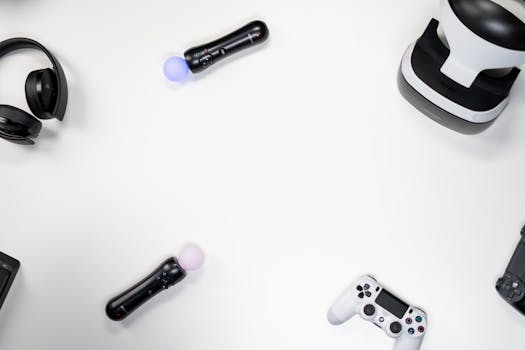
Input and interaction methods are essential for allowing users to engage with AR/VR environments. VR systems often use handheld controllers that allow users to manipulate objects, navigate menus, and perform other actions in the virtual world. AR interaction can involve hand gestures, voice commands, or even eye tracking. The goal is to create intuitive and natural interaction methods that minimize the learning curve and maximize user engagement.
Controllers with haptic feedback, which provide tactile sensations to the user, are becoming increasingly common in VR. AR applications can leverage the user's smartphone screen as an input device, allowing them to interact with virtual objects by tapping, swiping, or pinching. Eye-tracking technology allows AR/VR devices to track the user's gaze, enabling new forms of interaction, such as selecting objects by simply looking at them. The development of more natural and intuitive input methods is crucial for the widespread adoption of AR/VR technology. This includes research into brain-computer interfaces and other advanced input methods.
Software and Content
The software and content are the driving force behind the AR/VR experience. This includes the operating systems, development tools, and applications that power the devices. Content can range from immersive VR games and simulations to AR apps that overlay information onto the real world. The quality and variety of content are essential for attracting and retaining users.
Game engines like Unity and Unreal Engine are widely used for creating AR/VR content. Software development kits (SDKs) provide developers with the tools they need to create applications for specific AR/VR platforms. The development of new content creation tools and the expansion of content libraries are essential for driving the growth of the AR/VR market. This includes the creation of more interactive and engaging experiences, as well as the development of industry-specific applications. For example, architecture firms are using VR to allow clients to virtually walk through buildings before they are built.
Common Misconceptions
Despite the increasing prevalence of AR/VR, several misconceptions persist:
Misconception 1: AR/VR is Just for Gaming and Entertainment.* While gaming is a significant application, AR/VR's potential extends far beyond entertainment. It's transforming healthcare, education, manufacturing, and numerous other sectors. Counter-evidence: Surgical simulations using VR are improving training outcomes for surgeons. AR is being used to guide workers in complex assembly tasks, increasing efficiency and reducing errors.
Misconception 2: AR/VR Causes Eye Strain and Motion Sickness.* Early VR systems were prone to causing these issues, but advancements in display technology, refresh rates, and tracking have significantly reduced these problems. Modern devices are designed with user comfort in mind. Counter-evidence: Many AR/VR applications are designed with built-in breaks and ergonomic considerations to minimize discomfort. Studies have shown that with proper usage, modern AR/VR devices pose minimal risk of eye strain or motion sickness.
Misconception 3: AR/VR is Too Expensive for Widespread Adoption.* While high-end VR systems can be costly, more affordable options are emerging, including smartphone-based VR headsets and lower-cost AR glasses. Furthermore, the cost of AR/VR development is decreasing as tools and platforms become more accessible. Counter-evidence: The availability of inexpensive VR viewers, like Google Cardboard, has made VR accessible to a wider audience. AR applications running on smartphones are also lowering the barrier to entry for users.
Comparative Analysis
AR/VR stands out among other technological advancements by offering immersive, interactive experiences that enhance user engagement and understanding.
AR/VR vs. Traditional 2D Interfaces: Traditional interfaces (like computer screens) are limited by their two-dimensional nature and lack of spatial context. AR/VR, on the other hand, places information and interactions within the user's real-world environment or creates a fully immersive virtual world, leading to more intuitive and engaging experiences. Pros of 2D interfaces: Lower cost, easier development. Cons of 2D interfaces*: Limited immersion, less intuitive.
AR/VR vs. Simulation Software (without dedicated devices): While simulation software can provide realistic training environments, it lacks the embodied experience of AR/VR. AR/VR allows users to physically interact with the simulated environment, leading to better retention and skill development. Pros of simulation software: Lower hardware costs, easier to deploy on existing computers. Cons of simulation software*: Less immersive, lacks physical interaction.
Why AR/VR is Often Superior:* AR/VR provides a unique combination of immersion, interactivity, and spatial context that is unmatched by other technologies. This makes it particularly well-suited for applications that require hands-on training, complex visualization, or enhanced user engagement. While alternative approaches may be suitable for some use cases, AR/VR offers a more powerful and versatile solution for many applications.
Best Practices
Implementing AR/VR effectively requires adherence to specific industry standards and best practices:
1. Prioritize User Experience: Design intuitive interfaces, minimize latency, and ensure comfortable viewing angles to prevent discomfort and maximize user engagement.
2. Optimize Content for Performance: Use efficient 3D models, textures, and code to ensure smooth frame rates and prevent performance issues on target devices.
3. Ensure Data Security and Privacy: Implement robust security measures to protect user data and privacy, particularly in applications that collect sensitive information.
4. Adhere to Accessibility Guidelines: Design AR/VR experiences that are accessible to users with disabilities, including options for text-to-speech, alternative input methods, and adjustable difficulty levels.
5. Comply with Safety Standards: Follow safety guidelines for AR/VR equipment usage, including warnings about potential hazards and recommended usage durations.
Common Challenges and Solutions:*
Challenge 1: Motion sickness. Solution: Use high refresh rates, minimize latency, and provide visual cues to help users orient themselves in the virtual environment.
Challenge 2: Limited field of view. Solution: Design interfaces that minimize the need for excessive head movements and consider using peripheral displays to expand the field of view.
Challenge 3: Lack of compelling content. Solution: Invest in creating high-quality, engaging AR/VR experiences that address specific user needs and provide real value.
Expert Insights
Industry experts emphasize the transformative potential of AR/VR across various sectors.
"AR/VR is not just a technology; it's a new medium for communication and interaction. It has the power to revolutionize the way we learn, work, and play," says Cathy Hackl, a leading AR/VR strategist and tech futurist.
Research from Deloitte indicates that companies investing in AR/VR are seeing significant improvements in productivity, efficiency, and customer satisfaction. A study by the University of California, Berkeley, found that VR training simulations led to a 275% increase in knowledge retention compared to traditional training methods.
Case studies highlight the impact of AR/VR in various industries. Boeing uses AR to guide technicians during aircraft assembly, reducing errors and improving efficiency. Ford uses VR to design and prototype new vehicles, shortening development cycles and saving costs. These examples demonstrate the tangible benefits of adopting AR/VR technology.
Step-by-Step Guide
Here's a step-by-step guide to effectively implementing AR/VR in a business setting:
1. Identify a Clear Use Case: Define a specific problem or opportunity that AR/VR can address. This could be improving training, enhancing customer engagement, or streamlining operations.
2. Choose the Right Hardware and Software: Select AR/VR devices and development tools that are appropriate for the chosen use case and budget. Consider factors like performance, portability, and ease of use.
3. Develop a Prototype: Create a basic prototype to test the feasibility and effectiveness of the AR/VR solution. Gather feedback from users and stakeholders to refine the design.
4. Design an Engaging User Experience: Prioritize user experience by creating intuitive interfaces, minimizing latency, and providing clear instructions. Consider incorporating elements of gamification to enhance engagement.
5. Integrate with Existing Systems: Integrate the AR/VR solution with existing business systems, such as CRM, ERP, or inventory management, to ensure seamless data flow and workflow integration.
6. Train Users and Provide Support: Provide comprehensive training to users on how to effectively use the AR/VR solution. Offer ongoing support to address any issues or questions that may arise.
7. Measure and Iterate: Track key performance indicators (KPIs) to measure the impact of the AR/VR solution. Use the data to identify areas for improvement and iterate on the design.
Practical Applications
Implementing AR/VR in real-life scenarios involves a structured approach:
1. Define Objectives: Clarify what aspect to improve with AR/VR (e.g., employee training, customer experience).
2. Choose Platform: Select suitable devices (e.g., HoloLens, Oculus Quest) based on needs and budget.
3. Develop Content: Create engaging and relevant AR/VR content (e.g., interactive simulations, 3D models).
4. Testing: Conduct thorough testing with target users to gather feedback and refine the application.
5. Integration: Integrate AR/VR solution within existing workflow or processes.
6. Deployment: Rollout the solution with proper training and support for effective adoption.
Essential Tools and Resources*: Unity/Unreal Engine for development, various AR/VR SDKs (e.g., ARKit, ARCore), and 3D modeling software.
Optimization Techniques*: 1. Optimize 3D assets to reduce lag. 2. Use spatial audio to enhance immersion. 3. Incorporate user feedback for iterative improvements.
Real-World Quotes & Testimonials
"AR/VR has the potential to transform industries and enhance human experiences in profound ways. It's an exciting time to be involved in this field," says Tim Sweeney, CEO of Epic Games.
"By embracing immersive technologies like AR and VR, companies can create more engaging and effective training programs, leading to improved employee performance and increased productivity," says Dr. Brenda Laurel, a VR pioneer and design researcher.
Common Questions
1. What are the key differences between AR and VR? AR overlays digital content onto the real world, while VR creates a fully immersive virtual environment. AR enhances the user's perception of reality, while VR replaces it entirely. The fundamental difference lies in the level of immersion and the interaction with the surrounding environment. AR allows the user to remain aware of their real-world surroundings, while VR completely isolates them from it. This difference dictates the suitable use cases for each technology, with AR being better suited for tasks that require interaction with the real world and VR being ideal for immersive simulations and experiences.
2. What are the potential benefits of using AR/VR in education? AR/VR can enhance engagement, improve knowledge retention, and provide access to virtual field trips and simulations. It can also personalize learning experiences and cater to different learning styles. It offers unique opportunity to visualize complex concepts and engage in hands-on learning experiences.
3. What are the security and privacy concerns associated with AR/VR? AR/VR devices collect a significant amount of user data, including location, gaze direction, and biometric information. This data could be vulnerable to hacking or misuse if not properly secured. It is imperative to employ secure data storage and access protocols.
4. What are the hardware requirements for running AR/VR applications? The hardware requirements depend on the complexity of the application. AR typically requires a smartphone or tablet with a camera and sensors, while VR requires a dedicated headset and powerful computer. The quality of the display, processing power, and tracking capabilities all impact the user experience.
5. How can businesses measure the ROI of AR/VR investments? Businesses can track KPIs such as increased productivity, reduced errors, improved customer satisfaction, and increased sales to measure the return on investment (ROI) of AR/VR initiatives. Tracking these KPIs provides data-driven insights into the effectiveness of AR/VR and enables informed decision-making.
6. What are the ethical considerations related to AR/VR? Ethical considerations include the potential for addiction, social isolation, and the creation of biased or misleading content. It is important to design AR/VR experiences that are responsible and ethical, promoting well-being and avoiding harm. This requires careful consideration of the potential psychological and social impacts of the technology.
Implementation Tips
1. Start Small and Iterate: Begin with a pilot project to test the feasibility of AR/VR and gradually scale up the implementation based on the results. This reduces risk and allows for adjustments based on real-world data.
2. Focus on User Needs: Design AR/VR experiences that are tailored to the specific needs and preferences of the target users. Conduct user research and gather feedback throughout the development process.
3. Choose the Right Platform: Select the AR/VR platform that best aligns with the project goals and budget. Consider factors like device compatibility, development tools, and target audience.
4. Optimize Performance: Optimize 3D models, textures, and code to ensure smooth frame rates and prevent performance issues. Use profiling tools to identify bottlenecks and optimize code accordingly.
5. Provide Training and Support: Provide comprehensive training to users on how to effectively use the AR/VR solution. Offer ongoing support to address any issues or questions that may arise.
6. Prioritize Accessibility: Design AR/VR experiences that are accessible to users with disabilities. Include options for text-to-speech, alternative input methods, and adjustable difficulty levels.
7. Ensure Data Security and Privacy: Implement robust security measures to protect user data and privacy. Comply with all relevant data protection regulations and be transparent about data collection practices.
8. Continuously Evaluate and Improve: Continuously evaluate the effectiveness of the AR/VR solution and make improvements based on user feedback and performance data. This ensures that the solution remains relevant and effective over time.
Recommended tools and methods*: Agile development methodologies, user testing, A/B testing, and performance monitoring tools.
User Case Studies
Case Study 1: Surgical Training with VR* A medical school implemented VR surgical simulations to train students. The results showed a significant improvement in surgical skills and a reduction in errors during actual surgeries. The implementation involved developing realistic 3D models of anatomical structures and creating interactive scenarios that mimicked real-life surgical procedures. Statistics showed a 40% reduction in errors and a 30% improvement in surgical speed.
Case Study 2: AR-Enhanced Maintenance* A manufacturing company used AR to guide technicians during equipment maintenance. Technicians used AR glasses to overlay instructions and diagrams onto the equipment, reducing errors and improving efficiency. The implementation involved integrating AR with existing maintenance management systems and providing technicians with hands-on training. The company reported a 25% reduction in maintenance time and a 15% reduction in equipment downtime.
Interactive Element (Optional)
Self-Assessment Quiz:
1. What is the key difference between AR and VR?
A) AR replaces the real world, VR enhances it.
B) VR replaces the real world, AR enhances it.
C) Both replace the real world.
D) Both enhance the real world.
2. Which industry is NOT currently being transformed by AR/VR?
A) Healthcare
B) Education
C) Transportation
D) Grocery store restocking
3. Which of the following is a common misconception about AR/VR?
A) It's only for gaming and entertainment.
B) It's easy to implement.
C) It's inexpensive to develop.
D) It requires no training.
(Answers: 1. B, 2. D, 3. A)
Future Outlook
Emerging trends in AR/VR point to a future where these technologies are seamlessly integrated into daily life.
1. Advancements in Hardware: Lighter, more comfortable, and more powerful AR/VR devices are on the horizon. These devices will feature higher resolution displays, wider fields of view, and improved tracking capabilities. This will lead to more immersive and comfortable experiences.
2. Expansion of 5G Connectivity: The rollout of 5G networks will enable faster data transfer rates and lower latency, facilitating more seamless and responsive AR/VR experiences. This will unlock new possibilities for mobile AR/VR applications.
3. Integration with AI: The integration of AI will enable more intelligent and personalized AR/VR experiences. AI can be used to generate realistic virtual environments, create adaptive learning experiences, and provide real-time assistance.
The long-term impact of AR/VR is expected to be transformative, altering how people interact with information, communicate with each other, and experience the world around them. This will lead to new business models, new forms of entertainment, and new ways of learning and working.
Conclusion
AR/VR devices are poised to revolutionize industries and transform human experiences. From improving training outcomes to enhancing customer engagement, the potential applications are vast and far-reaching. By embracing these technologies, businesses and individuals can unlock new opportunities and shape the future of interaction and information access. The time to explore and adopt AR/VR is now. Explore how augmented reality and virtual reality can reshape what's possible, start experimenting, and witness the future firsthand.


