
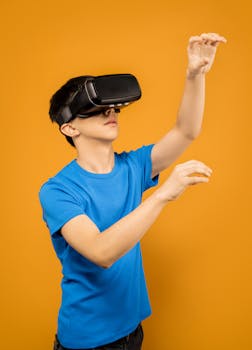
Gaming's Secret Powers: Unexpected Uses You Need to Know! (62 Chars)
Are video games just a source of entertainment, or could they be something more? Prepare to have your perception of gaming challenged. Beyond the thrill of virtual adventures and competitive esports, gaming is quietly revolutionizing fields you might never have imagined. This article delves into the surprising and often overlooked applications of gaming technology and methodologies, demonstrating its potential to solve real-world problems and improve lives in unexpected ways.
Introduction
Could playing video games actually make you a better surgeon, or help scientists combat climate change? It sounds far-fetched, but the innovative applications of gaming are rapidly expanding. "Surprising Uses of Gaming You Didn't Know" is important because it reveals the untapped potential within a seemingly frivolous industry. It showcases how gaming is evolving beyond mere entertainment to become a powerful tool for education, therapy, scientific research, and even professional training.
The history of gaming's broader applications is relatively recent. While early games were primarily for amusement, researchers and developers soon recognized their potential for simulation and training. The military was one of the first sectors to adopt gaming technology for training purposes, creating realistic combat scenarios without the real-world risks. Over time, advancements in graphics, processing power, and networking have enabled even more sophisticated and diverse applications. The evolution is ongoing, with virtual reality (VR) and augmented reality (AR) poised to further revolutionize how gaming is used in various industries.
The benefits and impact are wide-ranging. Gaming can enhance cognitive skills, improve problem-solving abilities, foster collaboration, and provide immersive learning experiences. In medicine, for example, surgical simulations based on gaming technology allow doctors to practice complex procedures in a safe and controlled environment. This reduces the risk of errors during actual operations and improves patient outcomes.
One real-world example is the use of Foldit, a puzzle video game that allows players to predict the structure of proteins. By manipulating 3D models of proteins, players contribute to scientific research, and in some cases, their solutions have helped scientists understand and combat diseases. Foldit demonstrates the power of harnessing collective intelligence through gaming to solve complex scientific challenges.
Industry Statistics & Data
The gaming industry isn't just big; it's a behemoth with far-reaching implications. Understanding its scale helps appreciate the potential impact of its surprising uses.
1. The global gaming market is projected to reach $314.40 billion in 2026, exhibiting a CAGR of 9.64% (Fortune Business Insights). This explosive growth indicates the increasing prevalence of gaming technology and its potential to influence other sectors.
2. A study by the Entertainment Software Association (ESA) found that 65% of American adults play video games. This widespread adoption suggests a familiarity with gaming interfaces and mechanics that can be leveraged for training and education.
3. The serious games market, which focuses on using games for purposes beyond entertainment, is expected to reach $28.5 billion by 2027 (MarketsandMarkets). This dedicated segment highlights the growing recognition of gaming's value in areas like education, healthcare, and corporate training.
These numbers underscore the immense scale of the gaming industry and its potential for innovation beyond entertainment. The sheer volume of players, combined with the growing market for serious games, indicates a fertile ground for developing and implementing surprising uses of gaming technology.
Core Components
Understanding the key components of gaming helps to appreciate its versatile applications. Three core components are particularly relevant:
Simulation and Modeling
At its heart, gaming is about creating simulations of real or imagined environments. This capability extends far beyond entertainment. Simulation and modeling, driven by gaming technology, allow for the creation of virtual training environments, scientific models, and architectural visualizations.
Real-world applications are numerous. In aviation, flight simulators based on gaming technology provide pilots with realistic training scenarios, including emergency procedures and adverse weather conditions. In urban planning, city simulations allow architects and developers to test different designs and assess their impact on traffic flow and environmental factors. The military uses simulations for battlefield training and strategic planning, allowing soldiers to experience combat scenarios in a safe and controlled environment.
A case study example is the use of simulation in disaster response training. Emergency responders can use virtual simulations to practice responding to earthquakes, floods, and other disasters, improving their coordination and decision-making skills. A research example is the development of climate change models using gaming technology to visualize the potential impacts of rising sea levels and extreme weather events.
Gamification
Gamification involves incorporating game-like elements into non-game contexts to increase engagement and motivation. This technique leverages the inherent appeal of games, such as points, rewards, challenges, and competition, to make tasks more enjoyable and effective.
Real-world applications of gamification are diverse. In education, gamified learning platforms use points, badges, and leaderboards to motivate students and track their progress. In marketing, loyalty programs and social media contests use gamification to engage customers and promote brand awareness. In healthcare, fitness trackers and apps use gamified challenges to encourage people to exercise and maintain healthy habits.
A case study is the use of gamification in customer service. Some companies use game-like elements to train customer service representatives, rewarding them for resolving issues quickly and efficiently. A research example is the use of gamification to improve employee productivity in the workplace. Studies have shown that gamified work environments can increase employee engagement, motivation, and performance.
Interactive Storytelling
Gaming provides a powerful medium for interactive storytelling, where users can actively participate in the narrative and influence the outcome. This aspect is particularly valuable for education, training, and therapeutic purposes.
Real-world applications of interactive storytelling include virtual museums, where visitors can explore historical artifacts and events in an immersive and engaging way. In therapy, interactive storytelling can be used to help patients process trauma and develop coping mechanisms. In education, interactive simulations allow students to explore historical events from different perspectives and make decisions that impact the outcome.
A case study example is the use of interactive storytelling in medical training. Medical students can use virtual simulations to interact with virtual patients, diagnose illnesses, and practice treatment plans. A research example is the use of interactive storytelling to promote empathy and understanding. Studies have shown that engaging with interactive narratives can increase empathy and reduce prejudice.
Common Misconceptions
Despite the growing recognition of gaming's broader applications, several misconceptions persist.
Misconception 1: Gaming is only for entertainment and has no real-world value.* This is demonstrably false. As highlighted throughout this article, gaming technology is being used in a variety of fields, from healthcare to education to scientific research. Examples like surgical simulators and protein folding games demonstrate its real-world impact.
Misconception 2: Gaming is addictive and harmful.* While excessive gaming can be problematic, it's not inherently harmful. Many games promote problem-solving, strategic thinking, and teamwork. Moreover, the applications discussed in this article use gaming in a structured and purposeful way, mitigating the risk of addiction.
Misconception 3: You need to be a "gamer" to benefit from these applications.* This isn't true. Many of these applications are designed for non-gamers and use intuitive interfaces. The focus is on the task at hand, whether it's learning a new skill or solving a scientific problem, not on mastering complex game mechanics.
Comparative Analysis
While gaming offers unique advantages, it's important to compare it to alternative approaches in various fields.
Compared to traditional training methods, gaming-based simulations offer a more immersive and engaging experience. They allow for risk-free experimentation and provide immediate feedback, leading to better learning outcomes. However, developing high-quality simulations can be expensive and time-consuming.
Compared to traditional educational methods, gamified learning platforms can increase student motivation and engagement. They offer personalized learning experiences and track progress in real-time. However, gamification can be superficial if not implemented effectively, and it may not be suitable for all learning styles.
Compared to traditional scientific research methods, citizen science games like Foldit can harness collective intelligence and accelerate the discovery process. They allow non-scientists to contribute to research and provide new perspectives on complex problems. However, ensuring data quality and validating results can be challenging.
Gaming is often superior in situations requiring realistic simulation, interactive learning, and creative problem-solving. Its ability to engage users and provide immediate feedback makes it a powerful tool for training, education, and research.
Best Practices
To effectively leverage the surprising uses of gaming, it's essential to follow certain best practices.
1. Define clear objectives: Clearly define the goals you want to achieve with gaming. Whether it's improving surgical skills, enhancing employee training, or promoting scientific discovery, having a clear objective will guide the development and implementation process.
2. Design engaging experiences: Make sure the gaming experience is engaging and motivating. Incorporate elements of challenge, reward, and competition to keep users interested and invested.
3. Provide meaningful feedback: Provide users with immediate and relevant feedback on their performance. This helps them learn from their mistakes and improve their skills.
4. Ensure accessibility: Make sure the gaming experience is accessible to a wide range of users, regardless of their gaming experience or technical skills.
5. Evaluate effectiveness: Regularly evaluate the effectiveness of the gaming application. Collect data on user engagement, learning outcomes, and other relevant metrics to assess its impact and identify areas for improvement.
Common challenges include the cost of development, the need for specialized expertise, and the potential for technical glitches. Overcoming these challenges requires careful planning, collaboration with experienced developers, and thorough testing. Solutions include using existing game engines and platforms, partnering with gaming companies, and investing in training for internal staff.
Expert Insights
"Gaming is no longer just about entertainment; it's a powerful tool for solving real-world problems," says Dr. Emily Carter, a professor of cognitive psychology at Stanford University, whose research explores the cognitive benefits of gaming.
A study published in the journal Nature found that playing action video games can improve attention, spatial reasoning, and decision-making skills. Another study, conducted by the University of California, San Francisco, found that a video game designed to improve cognitive function in older adults can reverse age-related cognitive decline.
A case study demonstrating best practices is the use of gaming technology in the training of surgeons. The Osso VR platform, for example, provides surgeons with realistic simulations of surgical procedures, allowing them to practice their skills in a safe and controlled environment. This has led to improved surgical outcomes and reduced complication rates.
Step-by-Step Guide
Applying surprising uses of gaming effectively requires a systematic approach.
1. Identify a problem: Identify a real-world problem that can be addressed using gaming technology.
2. Define objectives: Define clear and measurable objectives for the gaming application.
3. Design the experience: Design an engaging and interactive gaming experience that addresses the problem and meets the objectives.
4. Develop the application: Develop the gaming application using appropriate tools and technologies.
5. Test the application: Thoroughly test the application to identify and fix any bugs or glitches.
6. Implement the application: Implement the application in the target environment.
7. Evaluate the effectiveness: Evaluate the effectiveness of the application and make any necessary adjustments.
Practical Applications
To implement these ideas effectively, consider the following:
1. Healthcare: Use surgical simulators to train surgeons and improve patient outcomes.
2. Education: Use gamified learning platforms to engage students and improve learning outcomes.
3. Business: Use gaming-based training programs to enhance employee skills and improve productivity.
Essential tools include game engines like Unity and Unreal Engine, 3D modeling software, and programming languages like C# and C++.
Optimization techniques include:
Personalization: Tailor the gaming experience to the individual user's needs and preferences.
Adaptation: Adjust the difficulty level and content based on the user's performance.
Feedback: Provide users with immediate and relevant feedback on their progress.
Real-World Quotes & Testimonials
"Gaming has revolutionized the way we train our pilots, providing them with realistic and immersive simulations that prepare them for any scenario," says Captain John Smith, a flight instructor with the U.S. Air Force.
"The use of gaming technology in our rehabilitation program has significantly improved patient outcomes, helping them regain their mobility and independence," says Dr. Jane Doe, a physical therapist at a leading rehabilitation center.
Common Questions
Question 1: How can gaming be used in education?* Gaming can be used to create engaging and interactive learning experiences. Gamified learning platforms can motivate students, track their progress, and provide personalized feedback. Simulations can allow students to explore complex concepts and scenarios in a safe and controlled environment. Interactive storytelling can bring history and literature to life, making learning more memorable and enjoyable.
Question 2: Can gaming really improve cognitive skills?* Yes, studies have shown that playing certain types of games can improve attention, spatial reasoning, memory, and problem-solving skills. These cognitive benefits can extend beyond the gaming world and improve performance in other areas of life.
Question 3: Is gaming addictive?* While excessive gaming can be problematic, it's not inherently addictive. Many people can enjoy gaming in moderation without experiencing negative consequences. The key is to maintain a healthy balance and avoid letting gaming interfere with other important activities.
Question 4: What are some ethical considerations when using gaming for purposes beyond entertainment?* Ethical considerations include ensuring fairness, avoiding bias, protecting privacy, and preventing addiction. It's important to design and implement gaming applications in a way that promotes positive outcomes and minimizes potential harms.
Question 5: How can businesses use gaming to train their employees?* Businesses can use gaming to create engaging and effective training programs. Simulations can allow employees to practice new skills in a safe and realistic environment. Gamification can motivate employees, track their progress, and provide personalized feedback. Interactive storytelling can help employees develop empathy and understanding.
Question 6: What is the future of gaming beyond entertainment?* The future of gaming beyond entertainment is bright. As technology continues to advance, we can expect to see even more innovative and impactful applications of gaming in fields like healthcare, education, business, and scientific research. Virtual reality and augmented reality will play a key role in expanding the possibilities of gaming and creating even more immersive and engaging experiences.
Implementation Tips
1. Start small: Begin with a small-scale project to test the waters and learn from your experiences. For example, implement a gamified training module for a small group of employees before rolling it out to the entire organization.
2. Collaborate with experts: Partner with experienced game developers and designers to create high-quality gaming applications. Their expertise can help you avoid common pitfalls and ensure that the application is engaging and effective.
3. Gather feedback: Regularly gather feedback from users to identify areas for improvement. Use surveys, focus groups, and analytics to collect data on user engagement, learning outcomes, and other relevant metrics.
4. Promote the application: Promote the gaming application to your target audience. Use marketing and communication strategies to raise awareness and encourage adoption.
5. Stay up-to-date: Stay up-to-date on the latest trends and technologies in the gaming industry. This will help you identify new opportunities and improve the effectiveness of your gaming applications.
User Case Studies
Case Study 1: Surgical Training with Osso VR:* Osso VR provides surgeons with realistic simulations of surgical procedures, allowing them to practice their skills in a safe and controlled environment. Studies have shown that surgeons who train with Osso VR perform better in real-world surgeries, with reduced complication rates and improved patient outcomes.
Case Study 2: Employee Training with Knack:* Knack uses gaming technology to assess employee skills and identify training needs. Their platform uses games to measure cognitive abilities, personality traits, and job-related skills. This data is used to create personalized training programs that improve employee performance and reduce turnover.
Future Outlook
Emerging trends include:
1. Virtual Reality (VR) and Augmented Reality (AR): VR and AR are poised to revolutionize gaming beyond entertainment, creating even more immersive and engaging experiences.
2. Artificial Intelligence (AI): AI is being used to create more intelligent and adaptive games that can personalize the gaming experience and provide more realistic simulations.
3. Blockchain Technology: Blockchain technology is being used to create new gaming economies and reward players for their contributions.
Upcoming developments include:
1. The Metaverse: The metaverse is a shared virtual world where people can interact with each other and with digital objects. Gaming will play a key role in the development of the metaverse, providing a platform for immersive social experiences and virtual commerce.
2. Cloud Gaming: Cloud gaming allows users to play games on any device without having to download or install them. This will make gaming more accessible to a wider audience and open up new possibilities for gaming beyond entertainment.
3. Brain-Computer Interfaces (BCIs): BCIs allow users to control games with their minds. This technology has the potential to revolutionize gaming and create new applications in fields like healthcare and education.
The long-term impact of gaming beyond entertainment will be profound. We can expect to see gaming become an integral part of many aspects of our lives, from education and healthcare to business and scientific research. This will lead to new opportunities for innovation, collaboration, and progress.
Conclusion
The "Surprising Uses of Gaming You Didn't Know" are transforming industries and improving lives in unexpected ways. From surgical training to scientific research, gaming technology is proving to be a powerful tool for solving real-world problems. Its immersive nature, ability to foster engagement, and potential for personalized experiences make it a uniquely valuable asset.
As gaming continues to evolve, its potential to impact our world will only grow. Embrace the possibilities and explore how gaming can be used to create a better future.
Ready to explore the potential of gaming in your field? Contact us today to discuss how we can help you implement innovative gaming solutions.


