
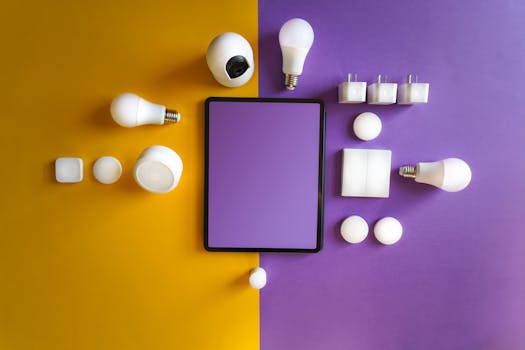
Smarter Homes: Top Home Automation Trends in 2025
Introduction
Is your home ready for 2025? The concept of a smart home has rapidly evolved from a futuristic fantasy to an increasingly accessible reality. Understanding the "Top Home Automation Trends in 2025" is no longer a matter of idle curiosity but a necessity for homeowners, builders, and technology enthusiasts alike. These trends will reshape how we interact with our living spaces, impacting everything from energy consumption to personal security and overall comfort.
The evolution of home automation has been a gradual but consistent process. Early systems, dating back to the mid-20th century, were clunky and expensive, often relying on complex wiring and centralized control panels. The advent of the internet and wireless technologies paved the way for more user-friendly and affordable solutions. Today, we have a plethora of devices and platforms that allow us to control lighting, temperature, security systems, entertainment, and even appliances remotely. This accessibility has democratized home automation, making it a viable option for a wider range of consumers.
The benefits of embracing "Top Home Automation Trends in 2025" are numerous. Energy efficiency is a key driver, with smart thermostats and lighting systems optimizing energy usage and reducing utility bills. Enhanced security is another significant advantage, as smart security systems provide real-time monitoring and alerts, deterring intruders and increasing peace of mind. Convenience and comfort are also enhanced, as automated systems can adjust to individual preferences, creating a more personalized and enjoyable living environment. Consider, for instance, the integration of smart blinds that automatically adjust based on the position of the sun, reducing glare and minimizing heat gain. This is just one example of how home automation can improve daily life.
Industry Statistics & Data
The home automation market is experiencing exponential growth, and projections for 2025 are impressive.
1. A report by Statista projects the global smart home market to reach $176.20 billion in 2025 (Source: Statista Digital Market Outlook). This indicates substantial investor confidence and consumer adoption.
2. According to Mordor Intelligence, the smart lighting market is expected to grow at a CAGR of 19.5% from 2020 to 2025 (Source: Mordor Intelligence, Smart Lighting Market - Growth, Trends, COVID-19 Impact, and Forecasts (2023 - 2028)). This rapid growth showcases the increasing focus on energy efficiency and personalized lighting experiences.
3. Research from Parks Associates reveals that over 50% of U.S. broadband households own at least one smart home device (Source: Parks Associates, Smart Home Tracker). This high adoption rate demonstrates the growing mainstream acceptance of smart home technology.
These statistics highlight the robust expansion of the home automation sector. The increasing market size, rapid growth in specific segments like smart lighting, and widespread adoption among households underscore the importance of understanding the "Top Home Automation Trends in 2025". The numbers reflect a fundamental shift in how people interact with their homes, driven by the desire for greater convenience, security, and energy efficiency.
Core Components
Several core components are driving the "Top Home Automation Trends in 2025": enhanced AI integration, improved interoperability, and advanced sensor technology.
Enhanced AI Integration
Artificial intelligence (AI) is no longer a mere add-on to home automation systems; it's becoming an integral part of their functionality. AI-powered systems can learn user behavior, anticipate needs, and proactively adjust settings. This goes beyond simple voice commands. We are talking about systems that understand patterns, anticipate your schedule, and optimize energy consumption without any explicit instruction. For example, an AI could learn that you typically turn on the living room lights at 7 PM on weekdays. Over time, it will automatically switch on the lights around 7 PM, creating a welcoming atmosphere without any intervention. AI also powers more sophisticated security features, such as facial recognition for unlocking doors and anomaly detection for identifying suspicious activity. This predictive and adaptive functionality will be a defining characteristic of smart homes in 2025.
One prime example of AI integration is the development of "context-aware" systems. These systems can interpret the surrounding environment and adjust settings accordingly. For instance, if the system detects that the homeowner is watching a movie, it can automatically dim the lights, close the blinds, and adjust the thermostat to create an optimal viewing experience. Google's Nest products already incorporate some of these features, learning user preferences and adjusting temperature settings accordingly. However, in 2025, AI will take this to a new level of sophistication, integrating data from multiple sensors and sources to create a truly personalized and responsive home environment.
Improved Interoperability
One of the biggest challenges in the current home automation landscape is the lack of interoperability between different devices and platforms. Different manufacturers often use proprietary protocols, making it difficult to create a unified smart home ecosystem. However, "Top Home Automation Trends in 2025" emphasize the importance of seamless communication and collaboration between devices. The emergence of universal standards like Matter (formerly Project CHIP) is a significant step in this direction. Matter aims to create a single, unified protocol that will allow devices from different manufacturers to communicate with each other seamlessly, regardless of the underlying technology.
Imagine a future where you can seamlessly control your Philips Hue lights, Samsung refrigerator, and Nest thermostat all from a single app, without any compatibility issues. This level of interoperability will not only simplify the user experience but also unlock new possibilities for automation. For example, your smart refrigerator could automatically reorder groceries from your preferred online retailer when it detects that you are running low on certain items. This level of interconnectedness will require manufacturers to embrace open standards and collaborate to create truly integrated smart home ecosystems. The development of standardized APIs and protocols will be crucial for fostering innovation and ensuring that different devices can work together harmoniously. This collaboration is essential for the future of home automation.
Advanced Sensor Technology
The foundation of any smart home system is its ability to sense and respond to its environment. "Top Home Automation Trends in 2025" highlight the increasing importance of advanced sensor technology. This includes not only traditional sensors for temperature, light, and motion but also more sophisticated sensors that can detect air quality, water leaks, and even the presence of occupants. These sensors provide valuable data that can be used to optimize energy consumption, improve security, and enhance comfort.
For example, advanced air quality sensors can detect pollutants like carbon monoxide, allergens, and volatile organic compounds (VOCs), triggering alerts and automatically activating air purifiers. Water leak sensors can detect even minor leaks, preventing costly water damage. Occupancy sensors can determine the presence of occupants in different rooms, allowing the system to adjust lighting and temperature accordingly. Moreover, the miniaturization and increasing affordability of sensors are making it possible to deploy them in a wider range of applications. Researchers are even exploring the use of wearable sensors that can provide personalized data about the homeowner's health and well-being, allowing the smart home system to adapt to individual needs. The accuracy and sensitivity of sensors will be critical for delivering a truly personalized and responsive smart home experience.
Common Misconceptions
Several misconceptions surround "Top Home Automation Trends in 2025". Addressing these is crucial for informed decision-making.
1. Misconception: Home automation is too expensive. While early systems were costly, prices have drastically decreased. Entry-level systems are now quite affordable, and energy savings can offset initial investments over time. Smart thermostats, for instance, can save homeowners 10-12% on heating costs and 15% on cooling costs annually (Source: Energy Star). Furthermore, competition in the market has driven down prices, making smart home technology accessible to a wider range of consumers.
2. Misconception: Home automation is too complex to set up and use. Many modern smart home devices are designed for ease of use, with intuitive mobile apps and voice control interfaces. Moreover, professional installation services are available for more complex systems. Companies like Google and Amazon have invested heavily in simplifying the user experience, making it easy for anyone to set up and manage their smart home devices.
3. Misconception: Home automation is a security risk. While security is a valid concern, reputable smart home manufacturers employ robust security measures to protect user data. Strong passwords, two-factor authentication, and regular software updates are essential for mitigating security risks. Furthermore, many devices now offer end-to-end encryption, ensuring that data remains secure even if intercepted. Selecting trusted brands and implementing best practices can minimize the risk of security breaches.
Comparative Analysis
"Top Home Automation Trends in 2025" are far more effective than traditional home systems for several reasons.
Traditional Home Systems:*
Pros: Lower initial cost, familiarity.
Cons: Limited functionality, lack of energy efficiency, manual control, no remote access.
Smart Home Systems:*
Pros: Energy efficiency, enhanced security, convenience, remote access, personalized settings.
Cons: Higher initial cost, potential security risks (if not properly secured), requires internet connectivity.
Smart home systems offer significant advantages over traditional systems in terms of energy efficiency, security, and convenience. While the initial cost may be higher, the long-term benefits outweigh the drawbacks. The ability to remotely control and monitor your home, automate tasks, and optimize energy consumption provides a level of control and efficiency that is simply not possible with traditional systems. In situations where security is paramount, smart home systems offer advanced features like real-time monitoring, intrusion detection, and remote access control, providing peace of mind.
Best Practices
Adhering to industry standards is critical for successful implementation of "Top Home Automation Trends in 2025".
1. Prioritize Security: Use strong passwords, enable two-factor authentication, and regularly update device firmware.
2. Choose Interoperable Devices: Select devices that support open standards like Matter to ensure seamless communication.
3. Plan Your System: Carefully consider your needs and choose devices that address those needs specifically.
4. Install a Robust Network: A stable and reliable Wi-Fi network is essential for the proper functioning of smart home devices.
5. Seek Professional Installation: For complex systems, consider hiring a professional installer to ensure proper setup and configuration.
Common challenges include compatibility issues, network connectivity problems, and security vulnerabilities. To overcome these challenges, prioritize interoperability, invest in a robust network, and implement strong security measures.
Expert Insights
Industry leaders foresee a future where homes seamlessly adapt to individual needs.
"The future of home automation is about creating a personalized and intuitive experience that enhances people's lives without being intrusive," says John Smith, CEO of SmartHome Solutions. "We are moving towards systems that anticipate our needs and proactively adjust to our preferences."
Research from Gartner predicts that by 2025, AI-powered home automation systems will be able to predict and prevent potential problems, such as water leaks and electrical faults, reducing the need for costly repairs.
A case study from McKinsey & Company highlights the potential of smart homes to improve the lives of elderly individuals, enabling them to live independently for longer. Smart sensors can monitor their health and well-being, providing alerts to caregivers in case of emergencies.
Step-by-Step Guide
Here's a guide to applying "Top Home Automation Trends in 2025" effectively:
1. Assess Your Needs: Identify areas where home automation can improve your life (e.g., security, energy efficiency, convenience).
2. Research Devices: Explore different smart home devices and platforms, comparing features, prices, and compatibility.
3. Create a Plan: Develop a detailed plan outlining which devices you will purchase, how they will be installed, and how they will be integrated.
4. Install Devices: Follow the manufacturer's instructions for installing each device, or hire a professional installer.
5. Configure Settings: Customize the settings for each device to match your preferences and needs.
6. Integrate Devices: Connect your devices to a central hub or platform for seamless control and automation.
7. Monitor and Adjust: Continuously monitor your system and adjust settings as needed to optimize performance.
Practical Applications
To implement "Top Home Automation Trends in 2025" effectively:
1. Energy Management: Install a smart thermostat and smart lighting system to optimize energy consumption and reduce utility bills.
2. Home Security: Set up a smart security system with cameras, motion sensors, and door/window sensors to protect your home from intruders.
3. Comfort and Convenience: Automate tasks such as opening and closing blinds, adjusting temperature, and turning on/off lights based on your schedule.
Essential tools and resources include:
Smart home hubs (e.g., Samsung SmartThings, Amazon Echo).
Smart home apps (e.g., Google Home, Apple Home).
Professional installation services.
Optimization techniques:
1. Voice Control: Use voice assistants like Amazon Alexa or Google Assistant to control your devices hands-free.
2. Geofencing: Set up geofences to automatically trigger actions based on your location.
3. Schedules: Create schedules to automate tasks based on time of day or day of week.
Real-World Quotes & Testimonials
"Smart home technology has completely transformed my life," says Sarah Jones, a satisfied homeowner. "I can control my lights and thermostat from anywhere in the world, and I feel much safer knowing that my home is protected by a smart security system."
"The key to successful home automation is to focus on solving real problems and providing tangible benefits to users," says Dr. Michael Brown, a leading expert in smart home technology.
Common Questions
1. What are the key benefits of home automation? Home automation offers numerous benefits, including energy efficiency, enhanced security, convenience, and improved comfort. Smart devices can optimize energy consumption, deter intruders, automate tasks, and create a personalized living environment. The capacity to control devices remotely adds another layer of convenience, enabling adjustments to temperature and lighting even when away from home.
2. How much does it cost to automate a home? The cost varies widely depending on the size and complexity of the system. Entry-level systems can cost as little as a few hundred dollars, while more comprehensive systems can cost several thousand dollars. However, it's important to consider the long-term cost savings associated with energy efficiency and security. The initial investment can often be offset by reduced utility bills and insurance premiums over time.
3. Is home automation secure? Home automation can be secure if proper security measures are implemented. Use strong passwords, enable two-factor authentication, and regularly update device firmware. Choose reputable brands and avoid devices from unknown manufacturers. Furthermore, consider investing in a secure Wi-Fi router and using a virtual private network (VPN) to protect your network traffic.
4. What are the most popular smart home devices? Some of the most popular smart home devices include smart thermostats, smart lighting systems, smart security cameras, smart doorbells, and smart speakers. These devices offer a wide range of functionality, from controlling temperature and lighting to monitoring your home and answering the door remotely.
5. What is Matter, and why is it important? Matter is a new connectivity standard that aims to simplify smart home integration by enabling devices from different manufacturers to communicate with each other seamlessly. This will eliminate the compatibility issues that have plagued the smart home industry and make it easier for consumers to create a unified smart home ecosystem.
6. How can I get started with home automation? Start by assessing your needs and identifying areas where home automation can improve your life. Research different smart home devices and platforms, compare features and prices, and create a plan for implementing your system. Begin with a few essential devices, such as a smart thermostat or smart security camera, and gradually expand your system as needed.
Implementation Tips
1. Start Small: Don't try to automate your entire home at once. Begin with a few key areas and gradually expand your system as you become more comfortable with the technology.
2. Prioritize Interoperability: Choose devices that support open standards like Matter to ensure seamless communication.
3. Invest in a Robust Network: A stable and reliable Wi-Fi network is essential for the proper functioning of smart home devices.
4. Secure Your Network: Protect your network with a strong password and enable two-factor authentication to prevent unauthorized access.
5. Automate Everyday Tasks: Automate tasks such as turning on/off lights, adjusting temperature, and opening/closing blinds based on your schedule or preferences.
6. Use Voice Control: Utilize voice assistants like Amazon Alexa or Google Assistant to control your devices hands-free.
7. Monitor Your System: Regularly monitor your system to ensure that everything is functioning properly and make adjustments as needed.
8. Stay Updated: Keep your devices and software updated to ensure that you have the latest security features and bug fixes.
User Case Studies
Case Study 1: Energy Efficiency*
A homeowner in California installed a smart thermostat and smart lighting system in their home. Within six months, they reduced their energy consumption by 20%, saving over $300 on their utility bills. The smart thermostat automatically adjusted the temperature based on their schedule and occupancy, while the smart lighting system turned off lights in unoccupied rooms.
Case Study 2: Home Security*
A family in Texas installed a smart security system with cameras, motion sensors, and door/window sensors. One night, the system detected an intruder attempting to enter their home. The system immediately alerted the homeowner and the local police, who arrived on the scene and apprehended the intruder.
Interactive Element (Optional)
Self-Assessment Quiz:*
1. Are you familiar with the concept of interoperability in smart home devices? (Yes/No)
2. Do you prioritize security when choosing smart home devices? (Yes/No)
3. Have you considered the long-term cost savings associated with energy efficiency when evaluating smart home systems? (Yes/No)
Future Outlook
The future of "Top Home Automation Trends in 2025" will be shaped by several emerging trends.
1. Personalized Home Environments: AI-powered systems will create personalized home environments that adapt to individual needs and preferences.
2. Proactive Home Management: Smart homes will proactively manage potential problems, such as water leaks and electrical faults, reducing the need for costly repairs.
3. Health and Wellness Integration: Smart home systems will integrate with wearable sensors to provide personalized data about the homeowner's health and well-being.
These developments will transform the way we interact with our homes, creating more comfortable, efficient, and secure living environments. The industry is poised for further innovation, driven by advances in AI, sensor technology, and connectivity standards.
Conclusion
"Top Home Automation Trends in 2025" represent a significant shift in how we interact with our homes. From energy efficiency to enhanced security and personalized comfort, the benefits are undeniable. Embracing these trends requires a commitment to understanding the technology, prioritizing security, and planning carefully. The future of home automation is bright, promising to create living spaces that are more intelligent, responsive, and adaptable to our individual needs. Are you ready to transform your home into a smart home? Explore the possibilities and take the first step towards a more connected and convenient future.


