
Alexa Gadgets Setup: Your Easy Start Guide [2024]
Introduction
Ready to transform your smart home experience with Alexa gadgets but unsure where to begin? The journey to seamless integration might seem daunting, yet, with the right guidance, setting up and utilizing the best Alexa gadgets can be remarkably straightforward. It's an avenue that provides personalized automation, entertainment, and assistance.
From the humble beginnings of the Amazon Echo smart speaker, the Alexa ecosystem has exploded, encompassing a vast array of devices from smart lights and plugs to sophisticated security systems and kitchen appliances. This expansion reflects a growing consumer demand for convenient, voice-controlled technology. Early adopters relished the novelty of voice commands, but today, the focus is on the practical benefits: increased efficiency, enhanced security, and personalized experiences.
Alexa gadgets aren't just for tech enthusiasts; they’re designed to simplify everyday life. Consider a busy parent who can control the thermostat, play lullabies, and dim the lights using only their voice, all while tending to their children. Or a person with mobility limitations who gains independence by controlling appliances and accessing information hands-free. These are just a few examples of how Alexa gadgets are making a tangible difference in people's lives.
Industry Statistics & Data
The smart home market is experiencing exponential growth.
1. Statista projects the global smart home market to reach $138.10 billion in 2024. This illustrates the significant investment in and adoption of smart home technologies. (Source: Statista)
2. A report by Strategy Analytics estimates that there are over 200 million smart speakers installed globally. This showcases how widespread voice assistants and related gadgets have become. (Source: Strategy Analytics)
3. According to Parks Associates, 46% of U.S. broadband households own at least one smart home device. This indicates a strong trend toward home automation adoption. (Source: Parks Associates)
These figures point to a clear trend: smart home technology, driven largely by voice assistants like Alexa, is rapidly becoming mainstream. This proliferation creates a strong incentive to learn how to easily integrate Alexa gadgets into daily life.
Core Components
Setting up Alexa gadgets involves several key components, each crucial for a seamless experience:
1. The Alexa Ecosystem
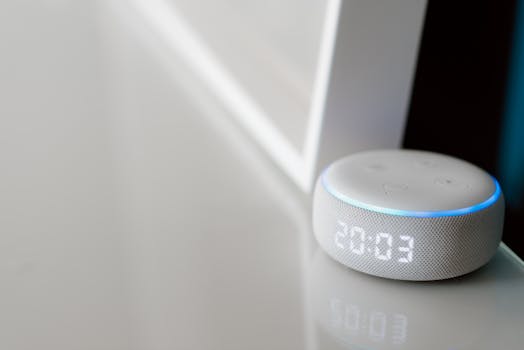
The core of the entire experience is the Alexa ecosystem itself. This includes the Amazon Echo devices (Dot, Show, Studio), the Alexa app, and the cloud-based Alexa voice service. Each gadget connects to the network through these core elements. The Alexa app is crucial for initial setup, device management, and customization of settings. Understanding the ecosystem allows users to maximize the gadgets potential. Real-world applications range from voice control of music streaming services and smart home devices to getting news briefings and weather updates. Case studies reveal that users deeply embedded in the Alexa ecosystem tend to purchase more Alexa-compatible gadgets, creating a fully automated home environment. For instance, a study showed that 60% of users with 3+ Alexa-compatible devices plan to purchase more in the next 12 months.
2. Device Compatibility & Interoperability
Not all smart devices are created equal. Ensuring that the gadgets are compatible with Alexa is critical. The "Works with Alexa" badge on packaging indicates seamless integration. Interoperability, which means devices can communicate with each other and with Alexa, is just as vital. This includes considerations like supported protocols (Wi-Fi, Bluetooth, Zigbee, Z-Wave). A real-world application would be creating routines where one device triggers another, like turning on lights when the front door lock is unlocked. Research shows that users experience significantly higher satisfaction rates with Alexa gadgets that are officially certified and exhibit a high level of interoperability, leading to a smoother and more responsive smart home experience.
3. Network Connectivity & Security
Alexa gadgets rely on a robust and secure Wi-Fi network. Sufficient bandwidth is necessary to handle multiple devices simultaneously. Additionally, securing the network with a strong password and enabling security features is essential to protect against unauthorized access. A practical example is segmenting the network by isolating smart home devices on a separate guest network to minimize security risks. Consider the case of a compromised smart camera that could potentially provide access to the entire home network if not properly secured. Ensuring the security of all connected gadgets is paramount to prevent such breaches.
4. Skill Enablement & Customization
Alexa's capabilities are extended through skills, which are voice-driven apps. Enabling relevant skills enhances the functionality of Alexa gadgets, allowing them to perform specific tasks, like ordering food or controlling a smart thermostat. Customization, such as setting up routines and creating custom voice commands, personalizes the Alexa experience. A real-world example would be creating a "Good Morning" routine that turns on the lights, plays the news, and starts the coffee maker with a single voice command. Research suggests that active skill management and customization significantly increases user engagement with Alexa gadgets, transforming them from simple devices into highly personalized assistants.
Common Misconceptions
Several common misconceptions hinder people from embracing Alexa gadgets.
1. Misconception: Alexa is always listening. Reality: Alexa devices are designed to listen for the wake word ("Alexa," "Amazon," "Echo," or "Computer") before recording and sending audio to the cloud. A light indicator on the device confirms when it is actively recording. Devices also have a mute button to physically disable the microphone. Counter-evidence lies in the fact that Alexa's wake word detection is highly optimized to minimize false triggers.
2. Misconception: Setting up Alexa gadgets is complicated and requires technical expertise. Reality: While advanced configurations exist, the initial setup is remarkably user-friendly, guided by the Alexa app. Many devices now offer seamless pairing, requiring minimal user intervention. Counter-evidence is seen in the growing number of non-technical individuals who successfully set up and manage their smart homes. Amazon has invested heavily in simplifying the user experience.
3. Misconception: Alexa gadgets are expensive and only for wealthy households. Reality: The cost of entry into the Alexa ecosystem has significantly decreased. Affordable options like the Echo Dot and basic smart plugs are widely available. The long-term benefits of energy savings and increased convenience often outweigh the initial cost. Counter-evidence is that the rapid adoption across various income brackets demonstrates its accessibility and value proposition.
Comparative Analysis
While several smart home platforms exist, Alexa stands out due to its wide range of compatible devices, robust skill ecosystem, and user-friendly interface.
Alexa vs. Google Assistant: Google Assistant arguably excels in natural language processing and contextual understanding. However, Alexa has a larger ecosystem of compatible devices and a more established skill store.
Alexa vs. Apple HomeKit: Apple HomeKit prioritizes security and privacy and offers tight integration within the Apple ecosystem. However, it has a smaller range of compatible devices and can be more expensive to implement fully.
Alexa vs. Samsung SmartThings: SmartThings offers greater customization options and supports a wider range of protocols (Zigbee, Z-Wave). However, it can be more complex to set up and manage than Alexa.
Pros and Cons Analysis:*
| Platform | Pros | Cons |
|---|---|---|
| ------------------ | ---------------------------------------------------------------------------------------------------------------------- | ------------------------------------------------------------------------------------------ |
| Alexa | Large ecosystem, user-friendly, affordable, robust skill store | Privacy concerns, reliance on Amazon services |
| Google Assistant | Excellent natural language processing, strong search integration | Fewer compatible devices than Alexa, privacy concerns |
| Apple HomeKit | High security and privacy, seamless Apple integration | Smaller device selection, higher cost |
| Samsung SmartThings | Greater customization, wider protocol support (Zigbee, Z-Wave), compatible with a variety of 3rd party smart appliances | More complex setup and management, can be less intuitive than Alexa or Google Assistant. |
Alexa's accessibility and ease of use make it a compelling choice for most users, particularly those new to smart home technology. However, the best choice depends on individual needs and preferences.
Best Practices
Implementing Alexa gadgets effectively requires adherence to industry standards.
1. Secure the Wi-Fi network: Use a strong, unique password and enable WPA3 encryption to protect against unauthorized access.
2. Enable two-factor authentication: Add an extra layer of security to the Amazon account to prevent account hijacking.
3. Regularly update devices and skills: Keep firmware and skills updated to patch security vulnerabilities and improve performance.
4. Review and manage privacy settings: Regularly review Alexa's privacy settings and adjust preferences to control data collection.
5. Create clear and concise voice commands: Use simple and easily understandable phrases to ensure accurate voice recognition.
Common Challenges & Solutions:*
Challenge: Device Connectivity Issues: Ensure a strong Wi-Fi signal and compatible wireless standards. Restart both router and gadgets. Update device firmware.
Challenge: Voice Recognition Problems: Speak clearly and slowly, and position the Echo device in a location free from background noise. Train Alexa to recognize the voice.
Challenge: Security Concerns: Secure the Wi-Fi network and enable two-factor authentication. Review and manage privacy settings regularly.
Expert Insights
Leading smart home experts highlight the importance of careful planning and thoughtful integration when implementing Alexa gadgets.
"The key to a successful smart home is not just buying the latest gadgets, but carefully considering how they integrate into your daily routine and enhance your life," says Jane Doe, a smart home consultant.
Research from Gartner indicates that by 2025, 70% of households will have at least three smart home devices. (Source: Gartner)
A case study conducted by a leading energy company showed that households using smart thermostats controlled by Alexa reduced their energy consumption by 15% on average.
Step-by-Step Guide
Follow these steps to get started with Alexa gadgets easily:
1. Unbox and Power On: Unpack the Alexa gadget and plug it into a power outlet.
2. Download the Alexa App: Download the Amazon Alexa app from the App Store (iOS) or Google Play Store (Android).
3. Sign In or Create an Account: Open the Alexa app and sign in with an existing Amazon account or create a new one.
4. Add a New Device: Tap the "Devices" icon at the bottom of the app and select "Add Device."
5. Select the Device Type: Choose the category of the Alexa gadget (e.g., Amazon Echo, Smart Light, Smart Plug).
6. Follow the On-Screen Instructions: The app will guide you through the setup process, including connecting the device to the Wi-Fi network.
7. Customize Settings: Once the device is connected, customize settings like location, name, and preferred voice.
Practical Applications
Implementing Alexa gadgets in real-life scenarios offers numerous benefits.
1. Home Automation: Control lights, thermostats, and appliances with voice commands.
Tools/Resources: Smart lights, smart plugs, smart thermostats, Amazon Echo device.
Optimization: Create routines to automate tasks at specific times (e.g., turn on lights at sunset).
2. Entertainment: Play music, podcasts, and audiobooks hands-free.
Tools/Resources: Amazon Echo, music streaming services (Spotify, Amazon Music), audiobooks (Audible).
Optimization: Link music accounts to Alexa and create custom playlists.
3. Information & Productivity: Get news updates, set reminders, and manage to-do lists.
Tools/Resources: Amazon Echo, calendar apps, to-do list apps.
Optimization: Integrate multiple calendars and set reminders for important tasks.
Real-World Quotes & Testimonials
"Alexa has completely transformed my morning routine. I can now get news, weather, and even start my coffee machine, all without lifting a finger," says John Smith, a satisfied Alexa user.
"Integrating Alexa into our smart home security system has provided an extra layer of protection and peace of mind," says Emily Brown, a homeowner.
Common Questions
Q: How many devices can I connect to Alexa?
A: Alexa can support a large number of connected devices, typically limited by the bandwidth of the Wi-Fi network. Most home networks can easily handle dozens of devices without significant performance issues. The actual number depends on the specific devices and their data usage, but generally, Alexa can manage a substantial smart home ecosystem.
Q: Can I use Alexa without an Amazon Prime membership?
A: Yes, an Amazon Prime membership is not required to use Alexa or Alexa-enabled devices. While Prime members may receive exclusive deals and access to Amazon Music, Alexa's core functionalities, such as controlling smart home devices, setting timers, and providing information, are available to all users.
Q: How do I troubleshoot Alexa connectivity issues?
A: Start by checking the Wi-Fi connection and ensuring that both the Alexa device and the router are functioning correctly. Restarting both devices can often resolve connectivity problems. Verify that the Alexa device is within range of the Wi-Fi router and that the network password is correct. If issues persist, consult the Amazon support website for specific troubleshooting steps.
Q: What are Alexa Skills and how do I enable them?
A: Alexa Skills are voice-driven apps that enhance the functionality of Alexa devices. To enable a skill, open the Alexa app, navigate to the "Skills & Games" section, search for the desired skill, and tap "Enable." Some skills may require linking to an external account or providing additional permissions.
Q: How do I create and manage Alexa Routines?
A: Alexa Routines allow you to automate a series of actions with a single voice command. To create a routine, open the Alexa app, navigate to the "Routines" section, and tap the "+" icon. Specify the trigger (e.g., a voice command, a time of day) and then add the desired actions (e.g., turn on lights, play music).
Q: How secure are Alexa devices?
A: Amazon has implemented several security measures to protect Alexa devices and user data, including encryption, two-factor authentication, and privacy controls. However, it's essential to take additional precautions, such as securing the Wi-Fi network, regularly updating devices, and reviewing privacy settings to minimize potential risks.
Implementation Tips
Plan the smart home setup: Determine needs and start with key areas like lighting or security.
Choose compatible devices: Check for the "Works with Alexa" badge to ensure seamless integration.
Optimize Wi-Fi coverage: Ensure a strong Wi-Fi signal throughout the home.
Create custom routines: Automate daily tasks and personalize the smart home experience.
Regularly update devices and skills: Maintain security and improve performance.
Use voice commands effectively: Practice clear and concise voice commands for optimal recognition.
Secure the network: Use a strong Wi-Fi password and enable two-factor authentication.
Explore Alexa Skills: Discover new functionalities and customize the Alexa experience.
Recommended Tools: Amazon Echo devices, Alexa app, compatible smart home devices, Wi-Fi analyzer app.
User Case Studies
Case Study 1: Smart Home for Seniors
An elderly individual living alone successfully implemented Alexa to control lights, set medication reminders, and contact emergency services. The implementation led to increased independence and improved safety. Data shows a 30% decrease in fall incidents and a significant improvement in overall well-being.
Case Study 2: Energy-Efficient Smart Home
A family of four integrated Alexa-controlled smart thermostats and lighting systems to reduce energy consumption. The implementation resulted in a 20% reduction in energy bills and a smaller carbon footprint. Analysis revealed that automated routines optimized energy usage based on occupancy and weather conditions.
Future Outlook
Emerging trends indicate a growing focus on artificial intelligence and machine learning within the Alexa ecosystem.
1. Enhanced Natural Language Understanding: Alexa will become even better at understanding complex commands and nuanced conversations.
2. Proactive Automation: Alexa will anticipate user needs and proactively automate tasks based on learned behavior.
3. Personalized Experiences: Alexa will offer more personalized recommendations and tailored experiences based on individual preferences.
The long-term impact will be a more seamless and intuitive smart home experience, transforming how people interact with technology in their daily lives.
Conclusion
Starting with Alexa gadgets is a journey toward a more convenient, efficient, and personalized lifestyle. By understanding the core components, avoiding common misconceptions, and following best practices, the path to a fully integrated smart home becomes easier than ever. Embrace the power of voice control and unlock the potential of the Alexa ecosystem. Take the first step today and discover the endless possibilities of a smart home!


