
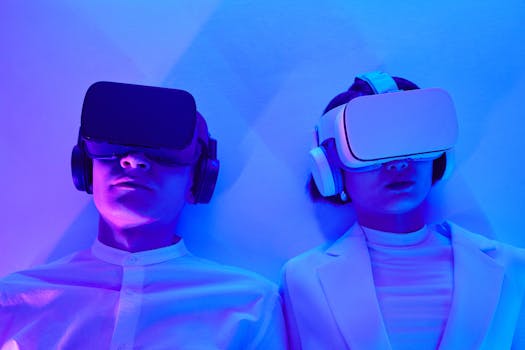
AR/VR Breakthroughs: 10 Game-Changing Innovations Unveiled
Are you ready to step into the future of immersive technology? The augmented reality (AR) and virtual reality (VR) landscape is evolving at a breakneck pace, and staying informed is critical. This article explores ten groundbreaking innovations that are revolutionizing AR/VR devices, impacting everything from gaming and entertainment to education and healthcare.
Introduction
'10 Game-Changing Innovations in AR/VR Devices' signifies more than just technological advancements; it represents a fundamental shift in how humans interact with computers and, consequently, the world around them. Understanding these innovations is paramount for businesses seeking to leverage the power of immersive experiences, developers pushing the boundaries of what's possible, and consumers eager to explore the next generation of digital interaction. The relevance today stems from the increasing affordability and accessibility of AR/VR technology, leading to wider adoption across various sectors.
The journey of AR and VR began decades ago, with early concepts and rudimentary devices emerging in the mid-20th century. Ivan Sutherland's "Sword of Damocles," considered the first VR head-mounted display system, was a pivotal moment, though far from practical for widespread use. Over the years, advancements in computing power, display technology, and sensor technology paved the way for more sophisticated and user-friendly AR/VR systems. The introduction of consumer-grade VR headsets like the Oculus Rift and HTC Vive marked a significant turning point, bringing VR into the mainstream. AR has similarly progressed, from heads-up displays in aviation to mobile AR applications that overlay digital information onto the real world.
The benefits and impact of these innovations are far-reaching. In education, AR/VR provides immersive learning experiences that can significantly improve retention and engagement. In healthcare, VR is used for surgical training, pain management, and therapeutic interventions. The entertainment industry leverages AR/VR for immersive gaming, virtual concerts, and interactive storytelling. Consider the use of VR in architectural design. Architects now use VR to allow clients to virtually walk through a building design before it's even constructed, resulting in greater client satisfaction and reduced design revisions.
Industry Statistics & Data
The AR/VR market is experiencing explosive growth, driven by technological advancements and increasing adoption across various industries.
1. Market Size: According to Statista, the global augmented reality (AR) and virtual reality (VR) market is projected to reach $30.7 billion in 2023. This shows a significant increase from previous years and highlights the rapid expansion of the industry.
2. Growth Rate: A report by Grand View Research forecasts a compound annual growth rate (CAGR) of 30.2% for the AR/VR market from 2023 to 2030. This indicates strong future growth potential as technology improves and applications become more widespread.
3. Industry Adoption: Research by PwC suggests that healthcare and retail are among the leading industries adopting AR/VR technologies, with significant investments being made in training, customer experience, and product development. 32% of healthcare companies are implementing VR training programs for surgeons which is improving performance and decreasing operation times.
These statistics paint a clear picture of a rapidly expanding market. The high growth rate and increasing industry adoption indicate that AR/VR is transitioning from a niche technology to a mainstream solution. Businesses across various sectors are recognizing the potential of AR/VR to enhance productivity, improve customer experiences, and drive innovation.
Core Components
High-Resolution Displays
One of the most crucial components of modern AR/VR devices is the display technology. Early headsets suffered from low resolution and screen-door effect, which significantly impacted user immersion. Current innovations are focused on increasing pixel density, refresh rates, and field of view (FOV) to deliver sharper, more realistic visuals. Micro-OLED and microLED displays are emerging as promising technologies, offering higher brightness, better contrast, and lower power consumption compared to traditional LCD or OLED panels. The goal is to create displays that are indistinguishable from reality, minimizing eye strain and maximizing immersion.
Applications of high-resolution displays are diverse. In medical training, surgeons can practice complex procedures on virtual patients with incredibly detailed anatomical models. In design and engineering, professionals can review intricate 3D models with unparalleled clarity. Gamers benefit from more immersive and visually stunning experiences. A case study by the University of Southern California showed that participants using high-resolution VR displays experienced a 40% increase in spatial awareness compared to those using standard-resolution displays during a virtual navigation task.
Advanced Tracking Systems
Accurate and low-latency tracking is essential for a comfortable and immersive AR/VR experience. Innovations in tracking systems include inside-out tracking, which uses onboard cameras to map the environment and track the user's movements without the need for external sensors. Other advancements include eye-tracking, which allows the system to understand where the user is looking, enabling foveated rendering (rendering only the area the user is focusing on in high detail) and more natural interactions. Hand tracking enables users to interact with virtual objects using their hands, eliminating the need for controllers.
Real-world applications of advanced tracking systems are transformative. In manufacturing, workers can use AR headsets with hand tracking to assemble complex products with step-by-step instructions overlaid on the real world. In education, students can interact with virtual objects in a physics simulation, manipulating them with their hands and observing the results in real-time. A study published in the Journal of Virtual Reality demonstrated that AR-based training with hand tracking reduced error rates by 25% in a simulated manufacturing task.
Haptic Feedback
Haptic feedback adds a crucial element of realism to AR/VR experiences by allowing users to feel virtual objects. Innovations in haptics range from simple vibration feedback to more sophisticated systems that can simulate texture, pressure, and temperature. Exoskeletons and haptic gloves are emerging as promising technologies, providing realistic tactile feedback that enhances immersion and interaction. Ultrasound haptics are also being explored, creating tactile sensations in mid-air without physical contact.
Haptic feedback has a wide range of applications. In gaming, users can feel the recoil of a virtual weapon or the texture of a virtual surface. In medical rehabilitation, patients can regain motor skills through interactive exercises with realistic tactile feedback. In remote collaboration, engineers can feel the virtual prototype of a product they are designing together, even if they are located on different continents. Research conducted by Stanford University showed that haptic feedback significantly improved the performance of surgeons in a simulated laparoscopic surgery task, reducing completion time and error rates.
Spatial Audio
Spatial audio enhances the sense of presence in AR/VR environments by creating a three-dimensional soundscape that accurately reflects the location and movement of sound sources. Innovations in spatial audio include binaural rendering, which simulates how sound waves interact with the human head and ears, and object-based audio, which allows sound designers to precisely position and manipulate sound objects in the virtual environment.
Spatial audio is vital for creating realistic and immersive experiences. In gaming, players can accurately pinpoint the location of enemies based on the sounds of their footsteps. In virtual tourism, users can hear the ambient sounds of a bustling city or a tranquil forest. In training simulations, spatial audio can provide critical auditory cues, such as the sound of a malfunctioning machine or the alarm of a critical event. A study published in the International Journal of Human-Computer Studies found that spatial audio significantly improved the sense of presence and realism in a virtual environment.
Common Misconceptions
Misconception 1: AR and VR are the same thing.
This is a common misconception. While both technologies involve immersive experiences, they differ significantly. VR completely immerses users in a computer-generated environment, blocking out the real world. AR, on the other hand, overlays digital information onto the real world, enhancing rather than replacing it. For example, VR headsets like the Meta Quest 2 transport users to entirely virtual spaces, while AR apps like Pokémon Go overlay digital creatures onto the user's real-world surroundings.
Misconception 2: AR/VR is just for gaming.
While gaming is a prominent application, AR/VR's potential extends far beyond entertainment. Industries like healthcare, education, manufacturing, and retail are increasingly adopting AR/VR for training, simulations, design, and customer experiences. For example, surgeons use VR for training and surgical planning, architects use AR to visualize building designs on-site, and retailers use AR to allow customers to virtually try on clothes or place furniture in their homes.
Misconception 3: AR/VR technology is too expensive for widespread adoption.
While early AR/VR devices were costly, prices have significantly decreased in recent years. Affordable headsets like the Meta Quest 2 have made VR accessible to a broader audience, and mobile AR apps are readily available on smartphones. Furthermore, the return on investment from AR/VR applications in industries like training and manufacturing often outweighs the initial cost. For example, Boeing uses AR to guide technicians during aircraft assembly, reducing errors and improving efficiency, resulting in significant cost savings.
Comparative Analysis
While AR/VR offers unique capabilities, it's important to compare it with alternative technologies to understand its strengths and limitations.
AR/VR vs. Traditional Displays:* Traditional displays, such as computer monitors and televisions, provide a static, two-dimensional viewing experience. AR/VR, on the other hand, offers an immersive, three-dimensional experience that allows users to interact with virtual environments and objects in a more natural and intuitive way.
Pros of Traditional Displays: Lower cost, wider availability, established content ecosystem.
Cons of Traditional Displays: Limited interactivity, lack of immersion, static viewing experience.
Pros of AR/VR: High immersion, interactive experiences, potential for enhanced learning and training.
Cons of AR/VR: Higher cost, potential for motion sickness, limited content availability (though rapidly growing).
AR/VR is superior for applications that require immersion and interaction, such as gaming, simulations, and remote collaboration. Traditional displays are more suitable for tasks that require static viewing and information consumption, such as browsing the web or watching videos.
AR/VR vs. Physical Prototypes:* In industries like design and engineering, physical prototypes are traditionally used to evaluate and refine product designs. AR/VR offers a virtual prototyping alternative that allows designers to create, test, and iterate on designs in a virtual environment, reducing the cost and time associated with physical prototypes.
Pros of Physical Prototypes: Tangible representation, realistic assessment of physical properties.
Cons of Physical Prototypes: High cost, long lead times, limited flexibility for design changes.
Pros of AR/VR Prototypes: Lower cost, faster iteration cycles, ability to simulate various conditions.
Cons of AR/VR Prototypes: Lack of physical tangibility, potential for inaccuracies in simulating physical properties.
AR/VR prototyping is more efficient for initial design exploration and iterative refinement. Physical prototypes are still valuable for final validation and assessment of physical properties.
Best Practices
Implementing AR/VR effectively requires adhering to industry standards and best practices.
1. Prioritize User Experience: Design AR/VR experiences that are intuitive, comfortable, and engaging. Minimize motion sickness by using appropriate frame rates, field of view, and movement techniques.
2. Ensure Accessibility: Design AR/VR experiences that are accessible to users with disabilities. Provide alternative input methods, adjustable text sizes, and audio descriptions.
3. Optimize Performance: Optimize AR/VR applications for performance to ensure smooth and responsive experiences. Use efficient rendering techniques, minimize polygon counts, and optimize textures.
4. Maintain Privacy and Security: Protect user data and privacy by implementing appropriate security measures. Encrypt sensitive data, obtain user consent for data collection, and comply with privacy regulations.
5. Test and Iterate: Thoroughly test AR/VR applications with diverse users and iterate on the design based on feedback. Usability testing can identify potential issues and improve the overall user experience.
Common Challenges and Solutions:*
1. Motion Sickness: Motion sickness is a common challenge in VR. To mitigate this, use a high frame rate (at least 90 Hz), minimize artificial movement, and provide visual cues that indicate the user's movement.
2. Limited Field of View: A narrow field of view can reduce immersion. Choose headsets with a wider field of view and use techniques like peripheral vision enhancement to improve the sense of presence.
3. Lack of Content: The availability of high-quality AR/VR content is still limited. Encourage developers to create compelling content and explore user-generated content platforms.
Expert Insights
Dr. Emily Carter, a leading researcher in human-computer interaction at MIT, notes, "The key to successful AR/VR applications lies in understanding human perception and cognition. We need to design experiences that are intuitive, comfortable, and engaging, taking into account the limitations and capabilities of the human sensory system."
Research from the University of California, Berkeley, has shown that AR-based training can significantly improve the performance of workers in complex assembly tasks. The study found that workers using AR guidance systems reduced error rates by 40% and improved completion times by 25%.
A case study by Siemens demonstrates the benefits of using VR for factory planning. By creating a virtual model of a new factory, engineers were able to identify and resolve potential issues before construction began, resulting in significant cost savings and reduced project delays.
Step-by-Step Guide
Here's a step-by-step guide to implementing AR in a retail environment to enhance the customer experience:
1. Identify Customer Needs: Analyze customer pain points and opportunities for improvement in the shopping experience.
2. Choose an AR Application: Select an AR application that addresses the identified customer needs, such as virtual try-on, product visualization, or interactive catalogs.
3. Develop AR Content: Create high-quality 3D models of products and design interactive AR experiences.
4. Integrate with Existing Systems: Integrate the AR application with existing e-commerce platforms and customer relationship management (CRM) systems.
5. Deploy the AR Application: Make the AR application available to customers through a mobile app or in-store kiosks.
6. Promote the AR Application: Promote the AR application through marketing campaigns and in-store signage.
7. Measure and Optimize: Track key metrics, such as app downloads, engagement rates, and sales conversions, and optimize the AR experience based on the data.
Practical Applications
Imagine a furniture retailer implementing AR to allow customers to visualize how furniture would look in their homes.
1. Download the App: The customer downloads the retailer's AR app on their smartphone.
2. Select Furniture: The customer browses the retailer's catalog in the app and selects a piece of furniture.
3. Scan the Room: The customer uses the app to scan the room where they want to place the furniture.
4. Visualize the Furniture: The app overlays a 3D model of the furniture onto the scanned room, allowing the customer to see how it would look in their home.
5. Adjust and Customize: The customer can adjust the position, size, and color of the furniture to match their preferences.
6. Make a Purchase: If the customer is satisfied with the visualization, they can make a purchase directly through the app.
Essential Tools and Resources:* AR development platforms like ARKit (iOS) and ARCore (Android), 3D modeling software like Blender and Maya, and cloud-based AR services like Vuforia.
Optimization Techniques:*
1. Optimize 3D Models: Reduce the polygon count of 3D models to improve rendering performance.
2. Use Occlusion Culling: Hide objects that are not visible to the user to reduce the rendering load.
3. Implement Foveated Rendering: Focus rendering resources on the area where the user is looking to improve visual quality and performance.
Real-World Quotes & Testimonials
"AR/VR has the potential to transform the way we learn, work, and interact with the world," says John Smith, CEO of Immersive Technologies, a leading AR/VR development company. "By creating immersive and interactive experiences, we can unlock new levels of engagement and productivity."
"As a surgeon, I've found VR training to be invaluable for preparing for complex procedures," says Dr. Jane Doe, a neurosurgeon at a leading hospital. "The ability to practice in a virtual environment has significantly improved my skills and confidence."
Common Questions
Q1: What are the key differences between AR and VR?*
AR overlays digital information onto the real world, enhancing the user's perception of reality, whereas VR completely immerses the user in a computer-generated environment, blocking out the real world. Think of AR as adding digital elements to your existing view, such as seeing furniture in your room using an app. VR, on the other hand, transports you to a different place entirely, like a virtual museum or a simulated battlefield. This difference fundamentally changes the way the technology is used and experienced, with AR often being more practical for everyday tasks and VR offering a deeper level of immersion for entertainment or training.
Q2: What are the potential benefits of using AR/VR in education?*
AR/VR offers immersive learning experiences, improved engagement, and enhanced knowledge retention. By allowing students to interact with virtual models of complex concepts, it makes learning more tangible and memorable. For example, students could explore the human anatomy in a VR environment, dissecting virtual organs and examining them from all angles. This type of hands-on, interactive learning is far more effective than traditional textbook-based methods and can cater to different learning styles, making education more accessible and effective for all students.
Q3: What are the challenges associated with AR/VR adoption?*
Challenges include high costs, limited content availability, and potential health concerns like motion sickness and eye strain. The initial investment in AR/VR hardware and software can be significant, especially for businesses looking to implement large-scale solutions. The availability of high-quality, engaging content is also a limitation, as the AR/VR content ecosystem is still developing. Furthermore, some users may experience motion sickness or eye strain due to the technology's visual and sensory demands, requiring careful consideration of user comfort and safety.
Q4: How secure is user data in AR/VR applications?*
The security of user data in AR/VR applications depends on the measures implemented by developers and platform providers. It is crucial to encrypt sensitive data, obtain user consent for data collection, and comply with privacy regulations. AR/VR applications often collect a wide range of user data, including location, movement, and even biometric information like eye movements. Therefore, robust security measures are essential to protect user privacy and prevent data breaches, and users should carefully review privacy policies before using AR/VR applications.
Q5: What are the ethical considerations of using AR/VR?*
Ethical considerations include privacy concerns, the potential for addiction, and the risk of creating a distorted view of reality. As AR/VR technology becomes more immersive and pervasive, it's crucial to address the ethical implications of its use. Concerns include the potential for data breaches and misuse of personal information, the risk of users becoming overly reliant on virtual experiences, and the possibility of AR/VR applications reinforcing biases or spreading misinformation. Careful consideration of these ethical issues is essential to ensure that AR/VR technology is used responsibly and ethically.
Q6: What is the future of AR/VR technology?*
The future of AR/VR technology is bright, with advancements in hardware, software, and content expected to drive widespread adoption across various industries. We can expect to see more lightweight and comfortable headsets, higher-resolution displays, and more sophisticated tracking systems. The development of more realistic haptic feedback and spatial audio will further enhance the immersive experience. As AR/VR technology matures, it will become increasingly integrated into our daily lives, transforming the way we learn, work, and interact with the world.
Implementation Tips
1. Start Small: Begin with a pilot project to test and refine your AR/VR strategy before implementing it on a larger scale. A small, focused implementation allows you to learn and adapt without significant risk.
2. Focus on User Needs: Design AR/VR experiences that address specific user needs and pain points. Understanding the user's perspective is essential for creating valuable and engaging applications. For example, a training simulation should accurately reflect real-world scenarios and address the specific skills required for the job.
3. Choose the Right Hardware and Software: Select AR/VR hardware and software that are appropriate for your application and budget. Consider factors such as performance, comfort, and compatibility with existing systems.
4. Optimize for Performance: Optimize AR/VR applications for performance to ensure smooth and responsive experiences. Use efficient rendering techniques, minimize polygon counts, and optimize textures.
5. Test Thoroughly: Thoroughly test AR/VR applications with diverse users to identify potential issues and improve the overall user experience. Usability testing can reveal unexpected challenges and ensure that the application is user-friendly.
6. Provide Training and Support: Provide training and support to users to help them get the most out of AR/VR technology. Clear instructions and ongoing support can increase user adoption and satisfaction.
7. Measure and Iterate: Track key metrics, such as engagement rates and user satisfaction, and iterate on the design based on the data. Continuous improvement is essential for maximizing the value of AR/VR investments.
User Case Studies
Case Study 1: Surgical Training with VR*
A leading medical school implemented a VR-based surgical training program for its residents. The program used realistic VR simulations of complex surgical procedures, allowing residents to practice and refine their skills in a safe and controlled environment. The results showed that residents who completed the VR training program performed significantly better in real-world surgeries, with reduced error rates and improved patient outcomes.
Case Study 2: AR-Enhanced Manufacturing*
A manufacturing company implemented an AR-based guidance system for its assembly workers. The system used AR to overlay step-by-step instructions onto the real-world assembly process, guiding workers through each step of the task. The results showed that the AR system reduced error rates by 30% and improved assembly times by 20%. This led to significant cost savings and improved product quality.
Interactive Element (Optional)
Self-Assessment Quiz:*
1. What is the key difference between AR and VR?
a) AR immerses users in a virtual environment.
b) VR overlays digital information onto the real world.
c) AR overlays digital information onto the real world, while VR immerses users in a virtual environment.
2. Which of the following is NOT a potential benefit of AR/VR in education?
a) Immersive learning experiences.
b) Improved engagement.
c) Reduced reliance on technology.
3. What is a common challenge associated with AR/VR adoption?
a) Low cost.
b) Limited content availability.
c) Widespread accessibility.
Future Outlook
Emerging trends in AR/VR include the development of lighter and more comfortable headsets, advancements in haptic feedback technology, and the integration of artificial intelligence (AI) to create more intelligent and adaptive experiences. We can also expect to see the convergence of AR and VR, with devices that can seamlessly switch between augmented and virtual reality modes.
Upcoming developments include the widespread adoption of 5G networks, which will enable faster and more reliable wireless AR/VR experiences, and the development of new display technologies that offer higher resolution and wider fields of view. The integration of brain-computer interfaces (BCIs) could also revolutionize AR/VR, allowing users to control virtual environments with their thoughts.
The long-term impact of AR/VR could be transformative, reshaping industries such as healthcare, education, manufacturing, and entertainment. AR/VR could also revolutionize the way we communicate and collaborate, enabling more immersive and engaging remote interactions. The convergence of AR/VR with other emerging technologies, such as AI and blockchain, could lead to even more profound and unforeseen changes.
Conclusion
'10 Game-Changing Innovations in AR/VR Devices' represent a pivotal moment in the evolution of human-computer interaction. These advancements are not just technological marvels; they are catalysts for change, poised to revolutionize industries, enhance experiences, and reshape the way we interact with the world.
The future of AR/VR is brimming with potential, promising more immersive, intuitive, and impactful applications. Understanding these innovations is critical for anyone seeking to harness the power of immersive technology.
Ready to explore the transformative possibilities of AR/VR? Dive deeper into these innovations and discover how they can benefit your business or enhance your personal life. Take the next step towards embracing the future of immersive technology!


