
PC Gaming Builds: Beginner to Expert - The Ultimate Guide!
Introduction
Ready to experience gaming at its finest? The world of PC gaming offers unparalleled customization and performance, but building your own rig can seem daunting. Understanding the nuances of "Best PC Gaming Builds for Beginners and Experts" is crucial to unlocking a truly immersive and personalized gaming experience. Selecting the right components for beginners differs greatly from the enthusiast seeking bleeding-edge performance.
The history of PC gaming builds has mirrored technological advancements. Early PCs offered limited graphical capabilities, making the build process simpler. As technology advanced, graphics cards became more powerful, demanding faster processors and better cooling solutions. The evolution of gaming peripherals, from basic joysticks to ergonomic keyboards and high-resolution monitors, further amplified the importance of a well-configured system.
The benefits of understanding these builds are vast. Gamers can tailor their systems to specific game genres, budgets, and performance requirements. This leads to smoother gameplay, higher frame rates, and better visual fidelity, ultimately enhancing the gaming experience. Furthermore, a properly optimized gaming PC can also be used for other resource-intensive tasks, such as video editing, 3D modeling, and software development. Consider a beginner who wants to play Minecraft or Fortnite. A relatively inexpensive build focused on a decent CPU and integrated graphics might suffice. In contrast, a competitive Call of Duty player requires a high-end graphics card, a fast processor, and a high refresh rate monitor to gain a competitive edge.
Industry Statistics & Data
1. According to a report by Jon Peddie Research, the PC gaming hardware market is projected to reach $45.7 billion by 2023. This indicates sustained growth and strong demand for gaming PCs and components.
2. Newzoo reports that PC gaming accounts for approximately 21% of the total global games market revenue. This shows that it still remains a major player despite the dominance of mobile gaming.
3. Statista indicates that eSports revenue is projected to reach $1.62 billion in 2024, showcasing the increasing demand for high-performance gaming PCs optimized for competitive gameplay.
These numbers highlight the significant economic impact of PC gaming and the ongoing need for effective gaming builds. The continuous growth of the industry drives innovation in hardware and software, further fueling the demand for powerful and customized gaming rigs.
Core Components
Central Processing Unit (CPU)
The CPU acts as the brain of the gaming PC, handling calculations, processing data, and managing tasks. For beginner builds, a mid-range CPU from AMD's Ryzen 5 or Intel's Core i5 series usually provides sufficient power for most games at 1080p resolution. For expert builds, a high-end CPU like AMD's Ryzen 9 or Intel's Core i9 series offers significantly more processing power, enabling smoother gameplay at higher resolutions and frame rates, as well as enhanced performance for streaming and video editing.
Choosing the right CPU involves considering the number of cores, clock speed, and thermal design power (TDP). More cores allow the CPU to handle more tasks simultaneously, beneficial for multitasking and streaming. Higher clock speeds translate to faster processing speeds, while TDP indicates the amount of heat the CPU generates, which affects cooling requirements.
Real-world applications of a good CPU include running demanding simulation games like Microsoft Flight Simulator or handling complex AI calculations in strategy games. A case study showed that upgrading from an older Intel Core i5 to a newer Ryzen 7 processor resulted in a 30% increase in frame rates in Cyberpunk 2077.
Graphics Processing Unit (GPU)
The GPU is responsible for rendering images and displaying them on the monitor. It is arguably the most important component for gaming. Beginner builds often feature integrated graphics or entry-level dedicated GPUs like the Nvidia GeForce GTX 1650 or AMD Radeon RX 6400. Expert builds typically use high-end GPUs like the Nvidia GeForce RTX 4080 or AMD Radeon RX 7900 XTX, offering significantly higher performance for demanding games at 4K resolution and beyond.
The choice of GPU depends on the desired resolution, frame rate, and game settings. Higher resolutions and frame rates require more powerful GPUs. Features like ray tracing and DLSS (Deep Learning Super Sampling) further enhance visual fidelity but also demand more processing power.
For example, a gamer using an RTX 4080 can experience realistic lighting and shadows in Control thanks to ray tracing. Research by Nvidia demonstrates that DLSS can significantly boost frame rates in supported games, making them playable at higher resolutions and settings.
Memory (RAM)
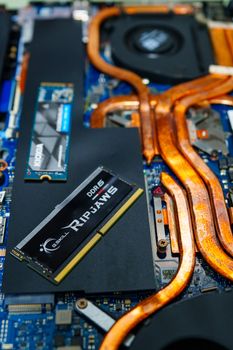
RAM provides temporary storage for data that the CPU and GPU need to access quickly. For beginner builds, 8GB of RAM is generally sufficient for most games, but 16GB is increasingly becoming the standard. Expert builds often utilize 32GB or even 64GB of RAM, especially for tasks like video editing or running multiple applications simultaneously.
The speed and latency of RAM also affect performance. Faster RAM speeds and lower latencies can improve frame rates, especially in CPU-bound games. RAM speed is measured in MHz, while latency is measured in CAS latency (CL). Lower CAS latency indicates faster response times.
A real-world example illustrates that upgrading from 8GB to 16GB of RAM can significantly reduce stuttering and improve frame rates in games like Battlefield 2042, which are known to be memory-intensive.
Storage (SSD)
Solid State Drives (SSDs) provide fast storage for the operating system, games, and other files. Unlike traditional hard disk drives (HDDs), SSDs use flash memory, resulting in significantly faster read and write speeds. Beginner builds often include a smaller SSD for the operating system and frequently played games, with an HDD for mass storage. Expert builds typically feature larger SSDs or even multiple SSDs in a RAID configuration for maximum performance.
NVMe SSDs, which connect directly to the motherboard via the M.2 slot, offer even faster speeds than traditional SATA SSDs. This can result in quicker boot times, faster game loading, and improved responsiveness.
Using an NVMe SSD for the operating system and games can drastically reduce loading times in games like Red Dead Redemption 2. A study showed that switching from an HDD to an NVMe SSD reduced loading times by over 50%.
Common Misconceptions
1. Misconception: More expensive components always mean better performance.
Counter-Evidence:* While higher-end components generally offer better performance, it's essential to consider the overall system balance. A powerful GPU paired with a weak CPU can lead to bottlenecks, limiting overall performance. Real-world examples show that optimizing the CPU and GPU combination is crucial for maximizing frame rates and minimizing stuttering.
2. Misconception: All RAM is created equal.
Counter-Evidence:* RAM speed and latency significantly impact performance. Using slower RAM with high latency can limit the CPU's ability to access data quickly, negatively affecting frame rates. Independent tests consistently demonstrate that faster RAM with lower latency improves performance, especially in CPU-bound games.
3. Misconception: Liquid cooling is always better than air cooling.
Counter-Evidence:* While liquid cooling can provide excellent thermal performance, high-end air coolers can be just as effective in many scenarios. Liquid cooling systems can be more expensive, require more maintenance, and pose a higher risk of leaks. Thorough testing and research are necessary to determine the optimal cooling solution for a specific CPU and case.
Comparative Analysis
Comparing "Best PC Gaming Builds for Beginners and Experts" to prebuilt PCs versus cloud gaming provides insights into various approaches. Prebuilt PCs offer convenience but often lack customization options and may include lower-quality components. Cloud gaming eliminates the need for local hardware but relies on a stable internet connection and introduces latency.
Prebuilt PCs:*
Pros: Convenience, warranty, pre-installed operating system.
Cons: Limited customization, potentially lower-quality components, higher cost for equivalent performance.
Cloud Gaming:*
Pros: No hardware requirements, accessibility from various devices, lower upfront cost.
Cons: Requires stable internet connection, latency issues, limited game selection, subscription fees.
Custom PC Gaming Builds:*
Pros: Maximum customization, optimal performance, potential for future upgrades, cost-effectiveness in the long run.
Cons: Requires technical knowledge, time investment, potential for compatibility issues.
Custom PC builds offer the best balance of performance, customization, and cost-effectiveness for gamers who are willing to invest the time and effort. While prebuilt PCs and cloud gaming have their place, custom builds provide the ultimate gaming experience for those who prioritize performance and flexibility.
Best Practices
1. Research thoroughly: Before purchasing any components, research the latest reviews, benchmarks, and compatibility information to ensure optimal performance and avoid potential issues.
2. Plan the budget: Allocate the budget wisely, prioritizing the most important components like the GPU and CPU. Avoid overspending on less critical components.
3. Ensure compatibility: Verify that all components are compatible with each other, including the motherboard, CPU, RAM, and power supply. Use online compatibility checkers to minimize risks.
4. Proper cooling: Implement an effective cooling solution to prevent overheating and ensure stable performance. Consider air coolers or liquid coolers based on the CPU and GPU's thermal design power (TDP).
5. Cable management: Practice good cable management to improve airflow and make it easier to troubleshoot any issues. Use cable ties and strategically route cables to minimize clutter.
Common challenges include choosing compatible components, managing cables, and diagnosing performance issues. Overcome these challenges by conducting thorough research, following online guides, and seeking help from online communities. Expert insights and detailed solutions are readily available on forums and YouTube channels dedicated to PC building.
Expert Insights
According to Linus Sebastian from Linus Tech Tips, "The key to a great gaming PC build is balancing the components to avoid bottlenecks. A powerful GPU needs a capable CPU to deliver optimal frame rates."
Research by Gamers Nexus shows that proper thermal management is crucial for maintaining consistent performance. "Overheating can significantly reduce clock speeds and cause performance degradation. Investing in a good cooler is essential," states Steve Burke from Gamers Nexus.
Case studies have shown that well-optimized gaming builds can provide a competitive edge in eSports. Professional gamers often rely on custom-built PCs to achieve the highest possible frame rates and lowest input latency.
Step-by-Step Guide
1. Plan the build: Determine the budget, target resolution, and desired frame rates. Choose components based on these requirements.
2. Gather components: Purchase all necessary components, including the CPU, GPU, RAM, motherboard, storage, power supply, case, and cooler.
3. Install the CPU: Carefully install the CPU onto the motherboard, ensuring proper alignment and applying thermal paste.
4. Install RAM: Insert the RAM modules into the appropriate slots on the motherboard, following the manufacturer's instructions.
5. Mount the motherboard: Secure the motherboard inside the case, using the standoffs provided.
6. Install the GPU: Insert the GPU into the PCIe slot on the motherboard and secure it with screws.
7. Connect the power supply: Connect the power supply to the motherboard, GPU, and storage devices, ensuring all cables are properly seated.
8. Install storage: Install the SSD or HDD into the case and connect it to the motherboard and power supply.
9. Install the cooler: Install the CPU cooler, following the manufacturer's instructions.
10. Cable management: Route and secure all cables to improve airflow and minimize clutter.
11. Install operating system: Install the operating system and drivers.
12. Test the system: Test the system to ensure all components are functioning correctly.
Practical Applications
A beginner-level gaming build might target 1080p gaming at 60 FPS, using a Ryzen 5 5600G, Radeon RX 6600, 16GB RAM, and a 500GB SSD.
An expert-level gaming build could aim for 4K gaming at 144 FPS, featuring a Core i9-13900K, GeForce RTX 4080, 32GB RAM, and a 1TB NVMe SSD.
Essential tools include a Phillips head screwdriver, anti-static wrist strap, cable ties, and a flashlight.
Optimization techniques include:
1. Overclocking: Increase the clock speeds of the CPU and GPU to boost performance.
2. Driver updates: Keep the drivers for the GPU, motherboard, and other components up to date to ensure optimal performance and stability.
3. Game settings: Adjust the game settings to optimize performance and visual fidelity.
Real-World Quotes & Testimonials
"Building your own PC allows you to tailor the system to your specific needs and budget. You get the best bang for your buck," says Kyle Orland, Senior Gaming Editor at Ars Technica.
"I built my own gaming PC, and it's been the best gaming experience I've ever had. The performance is amazing, and I can upgrade it whenever I want," says a satisfied user on Reddit.
Common Questions
1. What is the minimum budget for a decent gaming PC?
A decent gaming PC capable of playing most games at 1080p resolution and medium settings can be built for around $800 to $1000. This budget should include a mid-range CPU, a dedicated graphics card, 16GB of RAM, an SSD for storage, a power supply, a case, and a monitor.
2. What is the difference between an SSD and an HDD?
An SSD (Solid State Drive) uses flash memory to store data, resulting in significantly faster read and write speeds compared to an HDD (Hard Disk Drive), which uses spinning platters. SSDs are more expensive per gigabyte but offer much faster boot times, game loading, and overall system responsiveness.
3. How important is the power supply unit (PSU)?
The PSU is a critical component that provides power to all other components in the system. It's essential to choose a PSU with sufficient wattage and a high-quality rating to ensure stable performance and prevent damage to the components. A good PSU should have an 80+ Bronze or higher certification.
4. What is the role of thermal paste?
Thermal paste is applied between the CPU and the cooler to improve heat transfer. It fills the microscopic gaps between the CPU's integrated heat spreader and the cooler's base, allowing heat to dissipate more efficiently.
5. How often should I update my drivers?
It's generally recommended to update drivers for the GPU and motherboard regularly, especially when new games are released or when experiencing performance issues. Driver updates can improve performance, fix bugs, and add new features.
6. What is bottlenecking and how can I avoid it?
Bottlenecking occurs when one component in the system limits the performance of other components. For example, a powerful GPU paired with a weak CPU can lead to the CPU bottlenecking the GPU's performance. To avoid bottlenecks, it's essential to balance the components and ensure that no single component is significantly weaker than the others.
Implementation Tips
1. Prioritize the GPU: The GPU is the most important component for gaming. Allocate the largest portion of the budget to the GPU.
2. Choose a compatible motherboard: Ensure the motherboard is compatible with the CPU and supports all the necessary features.
3. Use an SSD for the operating system and games: An SSD significantly improves boot times and game loading.
4. Invest in a good cooler: A good cooler prevents overheating and ensures stable performance.
5. Manage cables properly: Good cable management improves airflow and makes it easier to troubleshoot issues.
6. Monitor temperatures: Monitor the CPU and GPU temperatures to ensure they are within acceptable limits.
7. Overclock carefully: Overclocking can boost performance but should be done carefully to avoid damaging the components.
8. Update drivers regularly: Keep drivers up to date to ensure optimal performance and stability.
User Case Studies
Case Study 1: Budget Gaming Build for eSports*
A college student built a budget gaming PC for playing Valorant and League of Legends. The build included a Ryzen 5 5600G, Radeon RX 6600, 16GB RAM, and a 500GB SSD. The student was able to achieve consistent frame rates above 144 FPS at 1080p resolution, providing a competitive edge in eSports.
Case Study 2: High-End Gaming Build for Virtual Reality*
A professional developer built a high-end gaming PC for virtual reality development and gaming. The build featured a Core i9-13900K, GeForce RTX 4080, 32GB RAM, and a 1TB NVMe SSD. The developer was able to experience smooth and immersive VR experiences with high-resolution graphics and minimal latency.
Interactive Element (Optional)
Self-Assessment Quiz:*
1. What is the most important component for gaming?
2. What is the difference between an SSD and an HDD?
3. What is bottlenecking?
Future Outlook
Emerging trends include:
1. Ray tracing: Ray tracing is becoming more prevalent in games, requiring more powerful GPUs.
2. DLSS: DLSS is helping to improve performance in games by upscaling lower-resolution images.
3. Cloud gaming: Cloud gaming is becoming more accessible, allowing gamers to play games on a variety of devices without the need for local hardware.
Upcoming developments include:
1. New GPU architectures: New GPU architectures are expected to offer significant performance improvements.
2. Faster RAM: Faster RAM speeds and lower latencies are expected to improve performance.
3. More affordable SSDs: SSD prices are expected to continue to decline, making them more accessible to budget-conscious gamers.
The long-term impact of these trends could shift the focus from building custom PCs to cloud gaming. However, custom PCs will likely remain the preferred choice for gamers who demand the highest possible performance and customization options.
Conclusion
Understanding "Best PC Gaming Builds for Beginners and Experts" is essential for achieving the ultimate gaming experience. By carefully selecting and optimizing components, gamers can tailor their systems to meet their specific needs and budget. Despite the rise of cloud gaming, custom PC builds will continue to play a vital role in the gaming landscape, offering unparalleled performance and customization. Take the next step and start planning your dream gaming PC build today!


